
No products in the cart.
NAD+ Research Compound: Uses, Purity, and Lab Applications
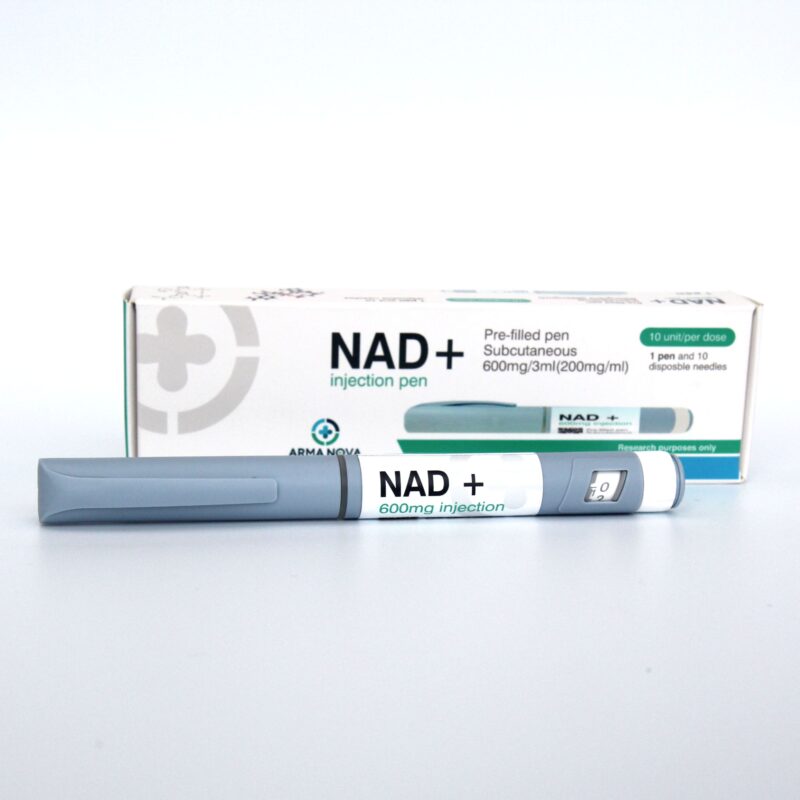
NAD+ Research Compound: Uses, Purity, and Lab Applications
Cellular energy metabolism sits at the center of some of the most consequential biochemical research happening right now — and NAD+ (nicotinamide adenine dinucleotide) is one of the most studied coenzymes driving that work forward. If your lab is investigating redox pathways, mitochondrial function, or NAD+-dependent enzyme activity, sourcing a high-purity, reliably formatted research material is non-negotiable. This guide breaks down what NAD+ is as a research compound, why its purity and format matter for reproducible results, who this material is designed for, and how to get started with a 600mg supply built for controlled scientific study.
What Is NAD+ as a Research Compound?
NAD+ (nicotinamide adenine dinucleotide) is a coenzyme found in all living cells, where it plays a central role in oxidation-reduction (redox) reactions and energy transfer processes. In a laboratory context, it serves as a critical research material for studying how cells generate and regulate energy, how mitochondria function under various conditions, and how NAD+-dependent enzymes — including sirtuins, PARPs, and CD38 — carry out their biological roles.
This particular NAD+ research compound is supplied as a 600mg lyophilized material, a format specifically chosen to support experimental reproducibility. Lyophilization (freeze-drying) removes moisture without degrading the compound’s structure, which means each preparation maintains consistent potency from the first experiment to the last. For researchers who need to replicate assays across multiple runs or compare data sets over time, this stability is not a minor detail — it is a fundamental requirement.
As a coenzyme, NAD+ operates in two primary chemical states: its oxidized form (NAD+) and its reduced form (NADH). Understanding the NAD+ vs NADH research distinction is essential when designing experiments. The oxidized NAD+ form accepts electrons during metabolic reactions, making it the active substrate for many enzymatic assays. Supplying pure NAD+ ensures your experimental baseline is unambiguous and your data interpretable.
It is important to note that this product is a laboratory research material labeled for non-human use only. It is supplied exclusively for in vitro and controlled scientific investigation, not for clinical, veterinary, or consumer applications.
Key Benefits and Features of This NAD+ Laboratory Material
High-Purity NAD+ Powder for Reliable Experimental Results
Impurities in a research compound do not just skew results — they can invalidate entire experimental series. This high-purity NAD+ powder is manufactured to minimize contaminants that could interfere with enzyme kinetics, spectrophotometric readings, or downstream assay sensitivity. When you’re working with NAD+-dependent reactions where substrate concentration must be precisely controlled, purity is your most important variable to lock down.
Lyophilized Format Supports Reproducible Experimental Handling
The lyophilized format of this NAD+ 600mg research material directly addresses one of the most common frustrations in metabolic research: compound degradation over time. Freeze-dried preparations are significantly more stable during storage and shipping compared to solutions, reducing batch-to-batch variability. Researchers can reconstitute exactly the volume needed per experiment, preserving the remainder without compromising integrity.
Relevant for Energy Metabolism and Redox Pathway Studies
NAD+ sits at the intersection of glycolysis, the citric acid cycle, and the electron transport chain — making it indispensable for energy metabolism and redox pathway research. Whether your team is mapping metabolic flux, quantifying NADH/NAD+ ratios, or studying how oxidative stress alters coenzyme availability, this material gives you a well-characterized starting point. Its defined chemical form means your experimental conditions are grounded in a known substrate.
Suitable for NAD+-Dependent Enzyme and Coenzyme Research
A wide range of enzymes require NAD+ as a cofactor or substrate, including alcohol dehydrogenase, lactate dehydrogenase, and the sirtuin family of deacylases. Supplying a consistent, high-quality NAD+ coenzyme study material allows researchers to characterize enzyme kinetics, measure Km and Vmax values, and screen inhibitors or activators under controlled conditions. This breadth of application makes the compound genuinely versatile across biochemistry, cell biology, and pharmacological research programs.
Clearly Labeled Non-Human-Use Research Material
Compliance and documentation matter in a research environment. This product ships with clear labeling that designates it as a research-only material, which simplifies procurement documentation, institutional review processes, and internal inventory management. Contract research labs and academic institutions that must maintain strict records of compound sourcing and intended use will find the labeling straightforward and audit-ready.
Who Is This For? Addressing Your Pain Points
You already know the frustration: you source a compound, run your first series of assays, and then spend the next week troubleshooting whether your results reflect biology or batch inconsistency. For researchers working in mitochondrial function research and cellular metabolism, this is not a hypothetical problem — it is a recurring one that costs time, consumables, and grant funding.
This NAD+ laboratory material is built for a specific set of users:
- Biochemical scientists studying enzyme kinetics who need a well-characterized NAD+ substrate with documented purity.
- Cell biology research teams investigating how NAD+ availability influences mitochondrial bioenergetics, apoptosis signaling, or metabolic reprogramming.
- Contract research organizations (CROs) that run standardized assay panels and need reproducible compound lots across multiple client projects.
- Academic institutions managing tight budgets who need a reliable supply of NAD+ for metabolic research without overpaying for pharmaceutical-grade material they do not require.
If you have ever received a compound that arrived degraded, lacked a certificate of analysis, or came with ambiguous labeling that complicated your institutional paperwork, you understand why format, purity documentation, and clear labeling are not optional extras. They are the baseline expectation — and this product is designed to meet it.
For labs specifically exploring the NAD+ vs NADH research axis — measuring coenzyme ratios as a proxy for metabolic state — having a pure, stable NAD+ reference material is the foundation everything else is built on. You cannot draw conclusions about redox balance if your substrate is of uncertain quality.
How to Get Started with NAD+ 600mg Research Material
Getting your NAD+ research compound from order to bench is a straightforward process when you know what to expect. Here is a practical walkthrough:
- Review the product specifications. Before ordering, confirm the supplied format (lyophilized, 600mg), purity grade, and labeling details match your experimental requirements and institutional procurement standards. Ensure the non-human-use designation aligns with your research protocol documentation.
- Place your order through the product page. Visit the NAD+ product listing and select your quantity. If you are running a multi-phase study or managing a CRO contract with multiple assay runs, consider ordering sufficient material to cover the full experimental series from a single lot — this eliminates inter-lot variability entirely.
- Store the lyophilized material correctly upon receipt. Lyophilized NAD+ should be stored according to the supplied documentation, typically at low temperature away from light and moisture. Do not reconstitute the full vial unless your protocol requires it — reconstitute only the volume needed per experiment to preserve stability.
- Reconstitute to your target concentration. Use an appropriate buffer or solvent as specified in your assay protocol. NAD+ is generally water-soluble, making it compatible with standard aqueous buffers used in enzymatic and cell-free assay systems. Prepare fresh working solutions when possible to minimize oxidation of your substrate.
- Integrate into your assay workflow. Whether you are running a cycling assay to quantify total NAD+, a kinetic enzyme assay, or a cell-based metabolic study, your high-purity starting material gives you confidence in your baseline conditions. Document lot numbers in your lab notebook for reproducibility and future reference.
Pro tip: If your research requires comparing NAD+ and NADH levels simultaneously, establish your NAD+ standard curve using this material first. A well-characterized pure substrate makes your standard curve more reliable and your quantification more defensible in publication.
Frequently Asked Questions
What is NAD+ used for in laboratory research?
NAD+ is used in laboratory research to study cellular energy metabolism, redox reactions, mitochondrial function, and NAD+-dependent enzyme pathways. It serves as a substrate or cofactor in assays involving dehydrogenases, sirtuins, PARPs, and other enzymes critical to metabolic and signaling biology. Researchers also use it as a reference material when quantifying intracellular NAD+/NADH ratios as indicators of metabolic state. As a research compound, it is supplied for in vitro and controlled experimental use only.
Why does purity matter when sourcing NAD+ for metabolic research?
In enzymatic and metabolic assays, even low-level impurities can alter reaction kinetics, produce background signal in spectrophotometric assays, or confound downstream analyses. High-purity NAD+ powder ensures that observed results reflect the biology under investigation rather than contaminant interference. For quantitative studies — particularly those measuring enzyme Km values or coenzyme turnover rates — purity directly affects the reliability and reproducibility of your data. Always request documentation of purity when sourcing any research-grade coenzyme.
What is the difference between NAD+ and NADH in research applications?
NAD+ is the oxidized form of nicotinamide adenine dinucleotide and functions as an electron acceptor in catabolic reactions, while NADH is the reduced form that carries electrons to the mitochondrial electron transport chain. In NAD+ vs NADH research, scientists often measure the ratio of these two forms as a readout of cellular redox state and metabolic activity. Supplying pure NAD+ as a defined starting material is essential when designing assays that depend on the oxidized form as a substrate, since contamination with NADH would distort your experimental conditions.
Is this NAD+ research compound suitable for contract research labs?
Yes — this NAD+ laboratory material is well-suited for contract research organizations that run standardized assay panels across multiple client projects. The lyophilized format supports consistent handling and storage, reducing inter-run variability that can complicate comparative data. Clear non-human-use labeling simplifies internal documentation and compliance tracking. Ordering sufficient material from a single lot further ensures consistency across the full duration of a contracted research program.
How should NAD+ laboratory material be stored to maintain stability?
Lyophilized NAD+ should be stored at low temperature — typically at -20°C or as specified in the accompanying product documentation — in a dry environment away from direct light. Moisture and heat are the primary drivers of NAD+ degradation, so avoid repeated freeze-thaw cycles with reconstituted solutions. Reconstitute only the volume required for each experimental session and prepare fresh working solutions where your protocol allows. Proper storage directly extends the usable life of your material and protects the consistency of your experimental results.
Ready to Source High-Purity NAD+ for Your Research Program?
NAD+ remains one of the most versatile and widely studied coenzymes in biochemical research — and the quality of your source material shapes the quality of every result that follows. This 600mg lyophilized NAD+ research compound delivers the purity, stability, and clear documentation that serious research programs demand, whether you are running enzyme kinetics, probing mitochondrial biology, or mapping redox pathway dynamics.
Don’t let compound quality become the variable that undermines your data. Source a material built for the precision your research requires. Visit the product page to review full specifications and place your order — and join the community of researchers already working with Arma Peptides by connecting via Exclusive Deals on Telegram for priority access and updates.
