No products in the cart.

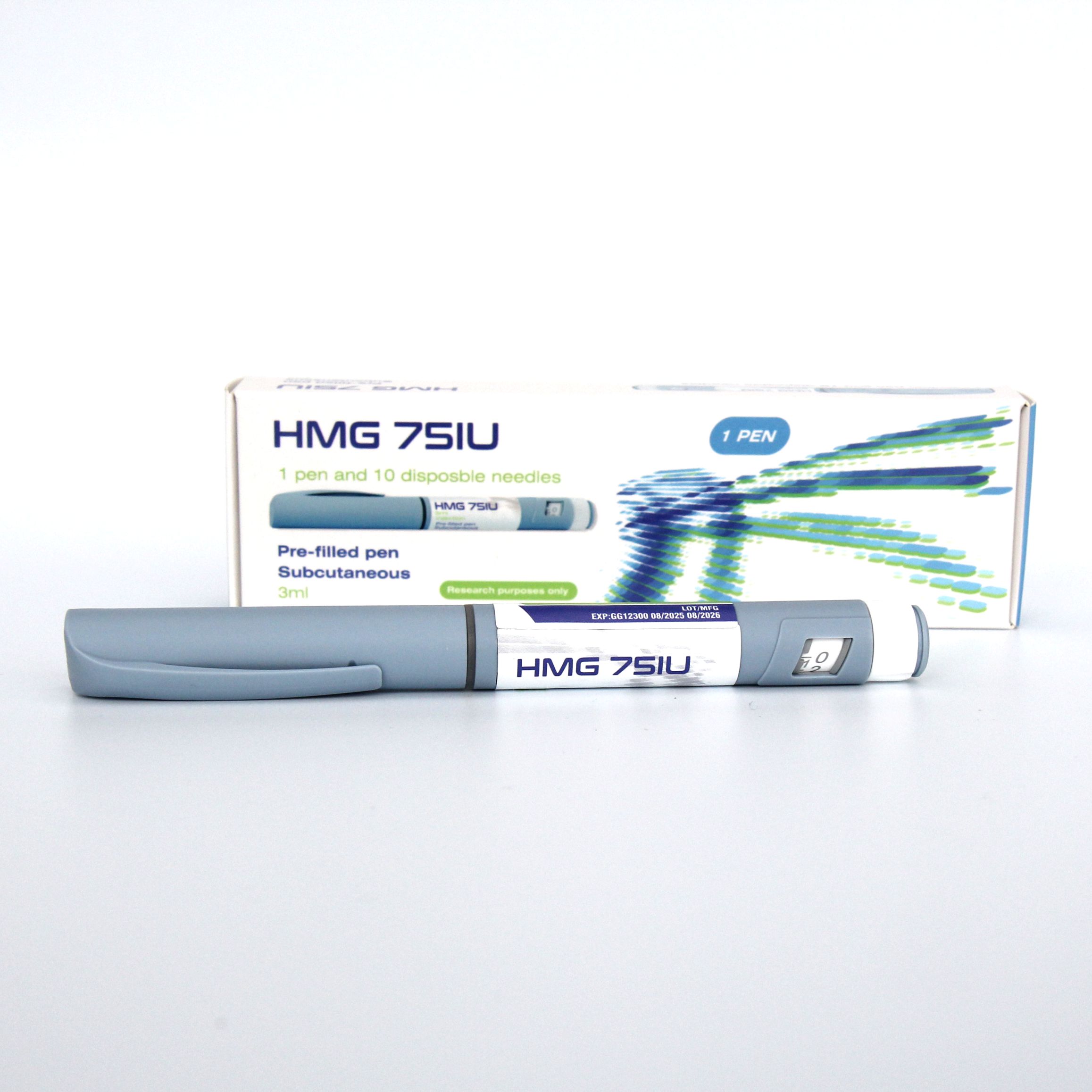
HMG 75IU Review: What Researchers Should Know Before Buying
If your research involves gonadotropin signaling, endocrine pathway analysis, or reproductive biochemistry, sourcing a reliable, high-purity compound is non-negotiable. HMG 75IU is a laboratory-grade research material that has become a go-to option for qualified scientists who need a well-documented, precisely formatted gonadotropin compound for controlled studies. In this review, you’ll get a clear breakdown of what HMG 75IU is, who it’s designed for, what makes it stand out from competing research compounds, and exactly how to get started with your order — including answers to the questions researchers ask most.
What Is HMG 75IU?
Human Menopausal Gonadotropin (HMG) is a naturally derived gonadotropin preparation containing both Follicle-Stimulating Hormone (FSH) and Luteinizing Hormone (LH) activity. In a research context, it serves as a critical tool for studying the hypothalamic-pituitary-gonadal (HPG) axis, folliculogenesis, spermatogenesis signaling, and broader endocrine feedback mechanisms.
The HMG 75IU research peptide format supplied here delivers 75 International Units of activity in a lyophilized powder vial — a format specifically chosen because it preserves bioactivity during storage and shipping. Lyophilization (freeze-drying) removes moisture without degrading the compound’s structural integrity, making it the gold standard for sensitive peptide and hormone materials in laboratory settings.
This product is intended strictly for in-vitro biochemical analysis and controlled scientific study. It is not approved for human consumption, veterinary use, or any clinical application. Researchers working in academic institutions, biotech firms, or life-science laboratories will recognize the 75 IU dose as a well-established benchmark in gonadotropin research protocols.
What separates a quality HMG 75IU research peptide from substandard alternatives comes down to two things: purity and documentation. Low-grade preparations introduce variables that compromise experimental reproducibility. That’s why sourcing from a supplier that applies strict quality control standards — and can provide Certificate of Analysis (COA) documentation — matters as much as the compound itself.
Key Benefits and Features
High-Purity Laboratory-Grade Material
When you’re running reproducible experiments, purity isn’t a preference — it’s a requirement. This high purity HMG peptide is manufactured under strict quality control standards designed to minimize contaminants and batch-to-batch variability. Impurities in gonadotropin preparations can skew receptor-binding assays, distort downstream signaling data, and invalidate entire experimental runs. Starting with laboratory-grade material eliminates that variable from the equation.
Supplied as 75 IU Lyophilized Powder Vial
The HMG 75IU powder vial format is the preferred choice for research applications because lyophilized compounds are significantly more stable than liquid solutions during storage and transit. Researchers can reconstitute the powder in bacteriostatic water or sterile saline at their preferred concentration, giving them precise control over working solutions. This flexibility makes the 75 IU format suitable for both small-scale pilot studies and larger comparative assays.
Strict Quality Control Standards
Every batch of this laboratory grade HMG is produced under controlled manufacturing conditions designed to meet the expectations of serious research environments. Quality control at this level means consistent potency, verified activity, and a traceable production process. For researchers who need to cite sourcing methodology in publications or institutional reports, this level of process discipline is essential.
Suitable for In-Vitro Biochemical and Peptide Analysis
This compound is purpose-built for endocrine research peptide applications, including receptor activation studies, hormone cascade modeling, and comparative analysis of gonadotropin activity. Its dual FSH/LH activity profile makes it especially valuable in studies where isolating or comparing the effects of each hormone component is part of the experimental design. Researchers studying follicular development models or Leydig cell stimulation pathways will find this format particularly applicable.
COA Documentation Available
Transparency in peptide sourcing is one of the most undervalued factors in research procurement. COA documentation — the Certificate of Analysis — gives you third-party or in-house verified data on purity, composition, and potency. Having access to COA records protects the integrity of your study, satisfies institutional compliance requirements, and gives you a paper trail if questions arise during peer review or internal audits. Always verify COA availability before finalizing any peptide purchase.
Who Is This For? Addressing Your Pain Points
You already know the frustration: you’ve sourced a compound that looked right on the product page, but when it arrived, the documentation was thin, the purity was unverified, and your preliminary assays produced inconsistent results. Starting over costs time, budget, and credibility within your team.
This product is designed specifically for academic researchers, laboratory technicians, and scientific institutions who need a gonadotropin compound they can trust from the first vial to the last. If you’re conducting reproductive study compound work — whether that’s modeling FSH-driven follicular recruitment, studying LH surge dynamics, or analyzing HPG axis feedback loops — the quality and format of your starting material directly determines the quality of your data.
Biotech and life-science lab personnel who work with gonadotropin-related pathways will also find this compound fits naturally into existing protocols. The 75 IU lyophilized format is compatible with standard reconstitution workflows, and the availability of COA documentation means you can integrate sourcing records into your lab’s compliance documentation without extra steps.
If you’ve been comparing HMG vs HCG research compounds for your specific application, it’s worth noting that HMG provides a combined FSH and LH activity profile, while HCG primarily mimics LH. For studies that require dual gonadotropin signaling — or where FSH activity is a key variable — HMG 75IU is the more appropriate research tool. Understanding that distinction before you order saves you from a costly mismatch between compound and experimental design.
How to Get Started
Getting your HMG 75IU research peptide from order to lab bench is a straightforward process when you know the steps. Here’s how to approach it:
- Confirm your research application. Before ordering, verify that HMG’s dual FSH/LH activity profile aligns with your experimental protocol. If your study specifically requires isolated FSH or LH activity, consult your protocol design before selecting this compound.
- Review the product listing and COA availability. Visit the product page and check for available documentation. Ensure you understand the format (lyophilized powder, 75 IU per vial) and storage requirements before placing your order.
- Place your order through the official product page. Use the direct product URL to order. For exclusive deals and updates, the supplier’s Telegram channel is an active resource for researchers looking to optimize procurement costs.
- Store correctly upon arrival. Lyophilized peptide vials should be stored in a cool, dry environment — typically refrigerated at 2–8°C — away from light and moisture. Do not reconstitute until you are ready to use the compound in your assay.
- Reconstitute at your target concentration. Use sterile bacteriostatic water or an appropriate carrier solution. Calculate your working concentration based on your assay requirements and handle all reconstituted material under aseptic conditions.
Pro tip: Label each reconstituted vial with the date and concentration. Reconstituted gonadotropin solutions have a limited working window, and clear labeling prevents accidental use of degraded material in sensitive assays.
Frequently Asked Questions
What is HMG 75IU used for in research?
HMG 75IU is used in laboratory research to study gonadotropin signaling, endocrine feedback mechanisms, and reproductive biology pathways. Its combined FSH and LH activity makes it suitable for in-vitro studies involving follicular development models, spermatogenesis signaling, and HPG axis analysis. It is a research-only compound and is not intended for human or veterinary use. Researchers select it when their protocol requires dual gonadotropin activity in a controlled, measurable format.
How does HMG differ from HCG in a research context?
In the HMG vs HCG research comparison, the key distinction is activity profile. HCG primarily mimics LH and is used in studies focused on luteinizing hormone receptor activation and testosterone synthesis pathways. HMG provides both FSH and LH activity, making it the preferred compound when researchers need to study or model both axes of gonadotropin signaling simultaneously. Choosing between them depends entirely on which hormone pathways are central to your experimental design.
What purity level should I expect from a laboratory-grade HMG peptide?
A high-purity HMG peptide intended for research use should come with verifiable COA documentation that confirms purity levels and composition. While specific purity percentages vary by batch and manufacturer, research-grade materials are typically held to stricter standards than non-verified alternatives. Always request or review the COA before use, and flag any batches where documentation is unavailable or incomplete. Purity directly impacts the reliability of your experimental results.
How should HMG 75IU powder vials be stored to maintain activity?
Lyophilized HMG 75IU powder vials should be stored refrigerated at 2–8°C in a dry, dark environment. Avoid repeated freeze-thaw cycles, which can degrade bioactivity over time. Once reconstituted, the working solution should be used promptly and stored at 4°C for short-term use only. Following proper storage protocols is essential for maintaining the compound’s activity profile and ensuring reproducible results across experimental runs.
Is HMG 75IU suitable for reproductive study compound research?
Yes — HMG 75IU is specifically well-suited for reproductive study compound applications due to its dual FSH and LH activity. Researchers studying folliculogenesis, Leydig cell function, or gonadotropin receptor dynamics will find the 75 IU lyophilized format compatible with standard reproductive biology assay workflows. It is, however, strictly a research material and must be handled in accordance with institutional guidelines for research compounds. Ensure your lab has the appropriate protocols in place before beginning work with any gonadotropin preparation.
Ready to Add HMG 75IU to Your Research Protocol?
For researchers who need a reliable, well-documented gonadotropin compound, HMG 75IU delivers the purity, format, and documentation standards that serious laboratory work demands. Whether you’re modeling endocrine feedback pathways, studying dual gonadotropin signaling, or benchmarking against other research compounds, this lyophilized 75 IU format gives you a consistent, traceable starting point for your studies.
Don’t let sourcing uncertainty slow down your research timeline. Order directly from the product page and get access to Exclusive Deals on Telegram — where the Arma Peptides team shares updates, promotions, and procurement resources for active researchers. Take the next step and secure your supply today.
Reviews
There are no reviews yet.