No products in the cart.

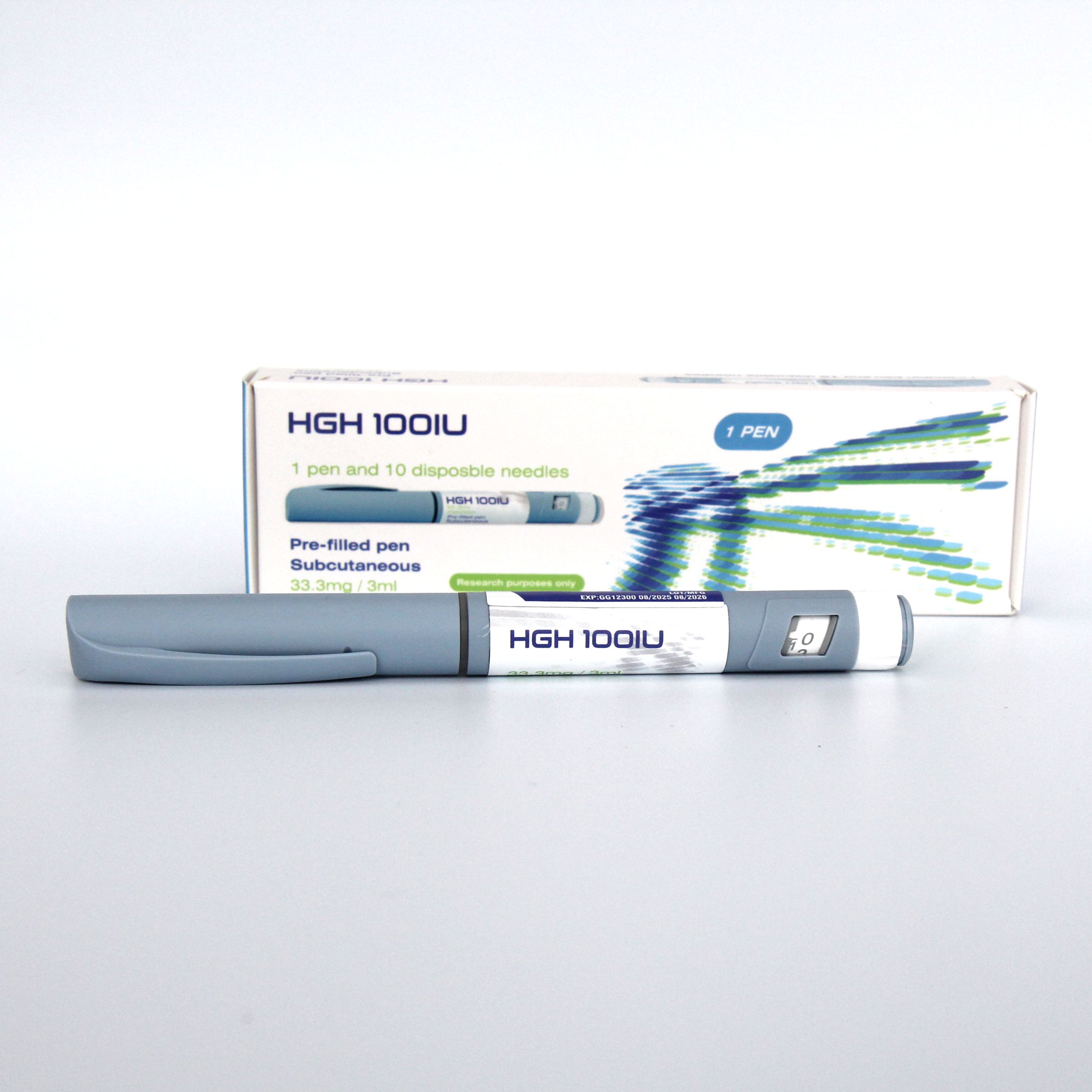
HGH Research Material: Uses, Quality, and Lab Applications
When a research project depends on compound integrity, even small variations in purity or stability can compromise months of work. HGH research material sits at the center of a growing number of biochemical, molecular, and cellular studies — and the quality of your source matters more than most researchers initially expect. This guide breaks down exactly what laboratory-grade HGH is, what makes a high-purity HGH vial worth sourcing, who it’s designed for, and how to get started with confidence. Whether you’re running controlled cell studies or designing a larger institutional protocol, you’ll find clear, actionable answers here.
What Is HGH 100 IU Research Material?
Human Growth Hormone — commonly abbreviated as HGH — is a peptide hormone naturally produced by the pituitary gland. In its research-grade form, HGH research material is a laboratory-synthesized compound produced under tightly controlled conditions to meet the purity and identity standards required for scientific investigation. The 100 IU format refers to the unit measurement used to quantify biological activity, giving researchers a standardized reference point when designing experimental dosing protocols.
This is not a clinical or pharmaceutical product. HGH 100 IU is explicitly positioned for non-clinical, controlled experimental settings — meaning it belongs in the hands of laboratory personnel, not general consumers. It’s manufactured to serve biochemical assays, molecular signaling studies, and cellular growth research where a reliable, well-characterized compound is essential.
What separates a laboratory-grade HGH compound from lower-quality alternatives is the documentation trail behind it. Rigorous identity testing confirms the compound is what it claims to be. Purity testing rules out contaminants that could skew experimental results. Stability data ensures the material behaves predictably across the storage and experimental timeline. Without these benchmarks, any data generated becomes difficult to defend or reproduce.
Researchers often compare HGH vs IGF-1 research applications when designing growth factor studies. While IGF-1 (Insulin-like Growth Factor 1) mediates many of HGH’s downstream cellular effects, HGH itself acts upstream and triggers a broader signaling cascade. Choosing between the two depends on whether your study targets primary receptor activation or downstream pathway effects. HGH 100 IU gives investigators access to that upstream entry point with the purity needed to draw clean conclusions.
Key Benefits and Features of HGH 100 IU
High-Purity Research Material for Reliable Laboratory Use
Purity isn’t a marketing term — it’s a functional requirement. When you introduce a compound into a cell culture or biochemical assay, any impurity becomes an uncontrolled variable. High-purity HGH vial formulations like this one are processed to minimize contaminants, ensuring that what you observe in your data reflects the compound’s actual biological activity rather than noise from byproducts. For labs publishing peer-reviewed results, this level of documentation is non-negotiable.
Suitable for Biochemical, Molecular, and Cellular Studies
HGH for cell studies covers a wide experimental range — from receptor binding assays to proliferation models to signaling pathway mapping. This versatility makes the 100 IU format a practical choice for institutions running multiple concurrent projects. A single well-characterized batch can serve across different study designs without requiring researchers to re-validate a new source mid-project.
Rigorous Purity, Identity, and Stability Testing
Every serious research compound requires a certificate of analysis (CoA) that confirms purity percentage, confirms identity via mass spectrometry or HPLC, and establishes stability under defined storage conditions. Laboratory-grade HGH at this standard gives your team the documentation needed to satisfy institutional review requirements and publication standards. Skipping this step with an untested compound is a risk no well-run lab can afford to take.
Packaged to Preserve Structural Integrity During Storage
Peptide compounds are structurally sensitive. Temperature fluctuations, light exposure, and moisture can degrade activity before the material ever reaches your bench. HGH 100 IU is packaged with preservation in mind — using formats that protect the compound’s three-dimensional structure from the point of manufacture through storage and handling. This matters especially for long-duration studies where consistent compound performance across experimental timepoints is critical.
Clearly Designated for Research Purposes Only
Compliance clarity protects your institution. Research hormone compounds that carry explicit research-only designations make it straightforward for procurement officers, ethics boards, and institutional review committees to approve sourcing. There’s no ambiguity about intended use, which simplifies documentation and keeps your project on track without administrative friction.
Who Is This For? Addressing Your Pain Points
If you’ve ever received a research compound with no accompanying CoA, or watched a study get delayed because a supplier couldn’t verify batch-to-batch consistency, you already understand the core frustration this product is designed to solve. HGH peptide research demands more than a vial with a label — it demands a compound you can actually build a methodology around.
This product is designed for:
- University researchers running controlled growth factor studies who need reproducible results across experimental replicates
- Institutional laboratory teams that require documented purity and identity data to satisfy ethics board requirements
- Biochemistry and molecular biology labs investigating HGH receptor signaling, downstream IGF-1 pathways, or cellular proliferation models
- Professional research organizations sourcing a stable research-only compound for multi-phase studies
The pain point most researchers cite is variability. When a compound’s purity shifts between batches, your controls stop being reliable. When a supplier can’t provide stability data, you can’t confidently store material for extended protocols. HGH 100 IU addresses both of these directly — with testing-backed specifications and packaging designed for integrity over time.
Pro tip: Always verify that your supplier provides a current CoA with each order, not just a generic document from a prior batch. Batch-specific documentation is what separates a trustworthy source from one that’s cutting corners.
How to Get Started with HGH 100 IU for Your Research
Getting this compound into your research workflow is straightforward when you approach it systematically. Here’s a practical walkthrough:
- Define your experimental objective. Before sourcing any research hormone compound, clarify whether HGH is the right upstream target for your study, or whether a downstream mediator like IGF-1 better fits your protocol. This decision shapes your dosing model and assay design from the start.
- Review the product specifications. Visit the product page and examine the listed purity, identity confirmation method, and storage requirements. Confirm the specifications align with your institutional sourcing standards before placing an order.
- Request or download the certificate of analysis. Any reputable supplier will make batch-specific CoA documentation available. Verify the purity percentage, identity test method (HPLC, MS, or equivalent), and storage conditions listed.
- Plan your storage protocol. Laboratory-grade HGH requires specific storage conditions — typically lyophilized and kept under refrigeration or freezer temperatures depending on your timeline. Establish your storage setup before the compound arrives to avoid any degradation risk during onboarding.
- Integrate into your experimental design. Once received and verified, incorporate the compound into your protocol using the unit-standardized 100 IU format as your reference baseline. Document your reconstitution method and handling steps to ensure reproducibility across your team.
Ensure you communicate with your supplier if you have questions about reconstitution volumes, recommended storage duration, or batch availability for long-term studies. A responsive supplier is part of the quality equation, not just the compound itself.
Frequently Asked Questions
What is HGH 100 IU research material used for in laboratory settings?
HGH 100 IU research material is used in biochemical, molecular, and cellular studies where researchers need a well-characterized growth hormone compound as an experimental variable. Common applications include receptor binding assays, cell proliferation studies, and signaling pathway investigations. It is strictly designated for non-clinical, controlled research use and is not intended for human administration. The 100 IU unit format provides a standardized activity reference for experimental dosing protocols.
How does laboratory-grade HGH differ from pharmaceutical HGH?
Laboratory-grade HGH is manufactured and documented specifically for research applications in controlled scientific settings — it is not produced under pharmaceutical GMP standards intended for clinical use. The key distinctions lie in the regulatory classification, intended use designation, and documentation format. Research-grade compounds come with scientific purity and identity documentation (CoA), while pharmaceutical products carry clinical safety and efficacy data. Researchers should always source compounds that match their specific regulatory context.
What purity level should I expect from a high-purity HGH vial for research?
For reliable research applications, a high-purity HGH vial should carry documented purity typically at or above 98%, confirmed via HPLC or equivalent analytical methods. Identity confirmation through mass spectrometry adds another layer of assurance that the compound matches its specification. Any supplier unable to provide this documentation for a specific batch should be treated with caution. Purity directly affects the reliability of your experimental results, so this is not an area to compromise.
Can HGH research material be used alongside IGF-1 in the same study?
Yes — HGH vs IGF-1 research designs that use both compounds are common in studies mapping the full growth hormone signaling axis. HGH activates the upstream receptor and triggers IGF-1 production, so combining both allows researchers to interrogate different points in the same pathway. Using both in a controlled setting requires careful experimental design to isolate each compound’s independent effects. Always ensure both compounds meet the same purity and documentation standards so your controls remain valid across the full study.
How should HGH 100 IU be stored to maintain stability?
HGH research material in lyophilized (freeze-dried) form should be stored at refrigerator temperatures (2–8°C) for short-term use, or at freezer temperatures (−20°C or below) for longer storage periods. Avoid repeated freeze-thaw cycles, as these can degrade peptide structure and reduce biological activity. Once reconstituted, use the solution promptly or store according to the supplier’s specific guidance. Always consult the product’s CoA for batch-specific stability data before finalizing your storage protocol.
Ready to Advance Your Research? Here’s Your Next Step
HGH 100 IU delivers what serious laboratory research demands: documented purity, structural integrity through storage, and a clear research-only designation that keeps your institutional compliance straightforward. Whether you’re mapping growth hormone signaling pathways, running cell proliferation models, or building a multi-phase study that needs a consistent compound across timepoints, this is the material built for that work.
Don’t let compound quality become the weak link in your experimental design. Access the full product specifications, review the documentation, and place your order with confidence. Exclusive Deals on Telegram — connect with the Arma Peptides team directly for sourcing support, batch availability, and researcher-specific inquiries. The faster you lock in a reliable compound source, the sooner your data starts speaking for itself.
Research context: see published growth hormone research (PMID: 20020365) for further reading.
Reviews
There are no reviews yet.