
No products in the cart.
RETATRUTIDE REVYTAL 40MG UK – Complete Research Guide 2026
RETATRUTIDE REVYTAL 40MG UK: Triple-Receptor Agonist for Weight Loss Research (2026)
In a landmark Phase 2 trial published in the New England Journal of Medicine, retatrutide (LY3437943) induced a mean body weight reduction of 24.2% at 48 weeks in participants receiving the 12 mg dose—exceeding the weight loss observed with any currently approved obesity medication. The therapeutic mechanism differentiating RETATRUTIDE REVYTAL 40MG from dual GLP-1/GIP agonists like tirzepatide lies in its third target: the glucagon receptor. This third receptor pathway drives thermogenesis, promotes hepatic fat oxidation, and increases energy expenditure through mechanisms unavailable to dual agonists. For UK-based researchers, biohackers, and longevity practitioners investigating metabolic interventions beyond semaglutide and tirzepatide, understanding retatrutide’s unique pharmacology and clinical outcomes is essential.
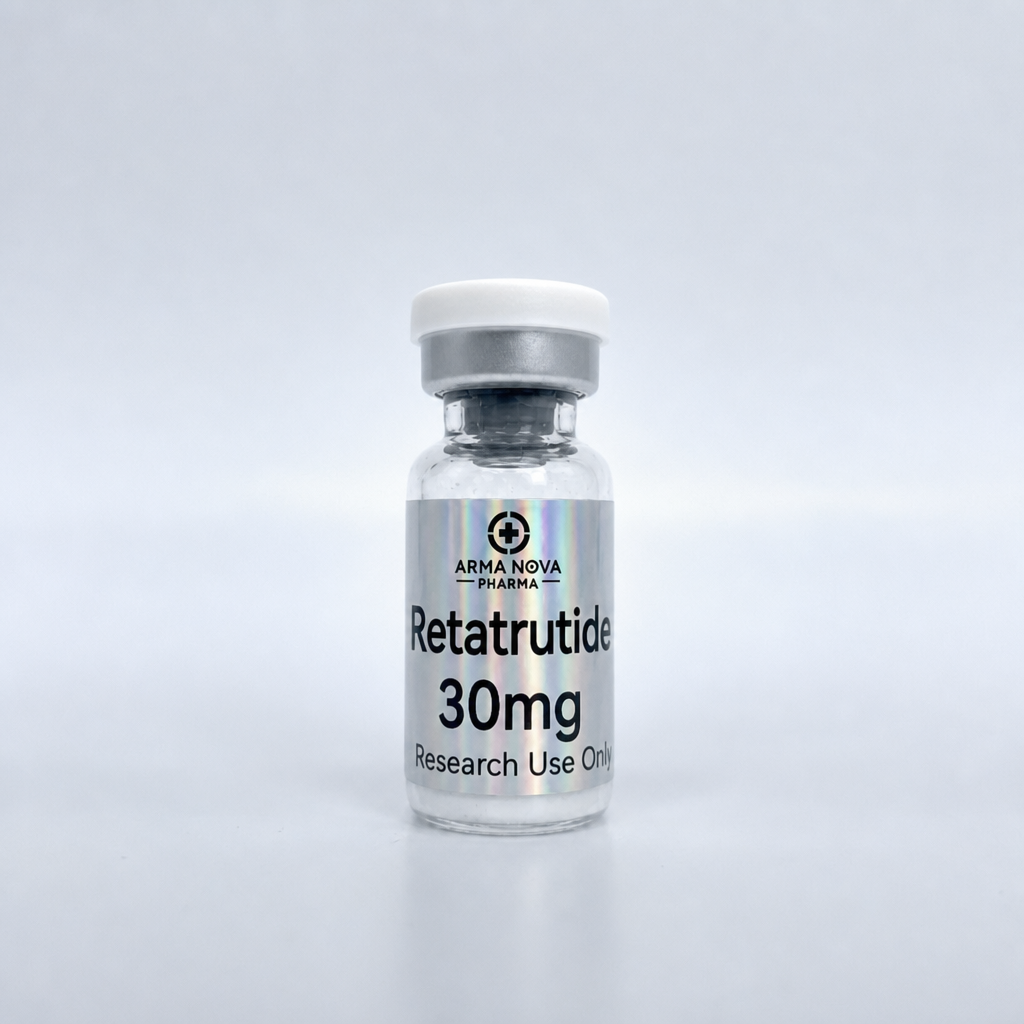
This guide provides a comprehensive analysis of RETATRUTIDE REVYTAL 40MG, covering molecular mechanisms, Phase 2 and Phase 3 trial data, UK sourcing standards including HPLC verification and certificate of analysis (COA) interpretation, research-referenced dosing protocols from published literature, and a direct comparison with other incretins available in the UK market. All claims are substantiated with peer-reviewed citations, and all product recommendations comply with UK law governing research peptides.
Biochemical Mechanism: How Triple Agonism Differentiates Retatrutide
Retatrutide (LY3437943) is a single-molecule triple agonist targeting GLP-1, GIP, and glucagon receptors. Each receptor contributes distinct metabolic effects:
- GLP-1 receptor agonism: Stimulates insulin secretion in a glucose-dependent manner, delays gastric emptying, suppresses appetite via hypothalamic signaling, and reduces hepatic glucose production. GLP-1 agonists such as Semaglutide UK leverage this pathway for glycaemic control and weight loss.
- GIP receptor agonism: Enhances insulin secretion, promotes adipocyte lipid storage in subcutaneous (rather than visceral) depots, improves beta-cell function, and may reduce food intake through central mechanisms. Dual GLP-1/GIP agonists like Tirzepatide UK combine these first two pathways.
- Glucagon receptor agonism: Increases energy expenditure by stimulating thermogenesis, enhances hepatic fatty acid oxidation, promotes lipolysis, and increases resting metabolic rate. This third component is absent from all currently approved incretin therapies and represents the core mechanistic differentiation of retatrutide.
The glucagon receptor’s role in energy balance is particularly important. Glucagon signaling activates hepatic lipid oxidation via upregulation of carnitine palmitoyltransferase 1 (CPT1), the rate-limiting enzyme for mitochondrial fatty acid uptake. Simultaneously, glucagon increases brown adipose tissue (BAT) thermogenesis and elevates metabolic rate. In preclinical models, selective glucagon receptor antagonism abolishes much of the weight loss benefit observed with triple agonism, confirming that the glucagon component is not redundant but mechanistically essential.
Pharmacokinetically, retatrutide exhibits a half-life of approximately 6.3 days, enabling once-weekly subcutaneous administration. The compound demonstrates balanced potency across all three receptors with EC50 values in the low nanomolar range for GLP-1, GIP, and glucagon receptors. This balanced activation contrasts with earlier triple agonist candidates that exhibited suboptimal receptor selectivity profiles or unfavorable safety margins.
What the Clinical Research Shows: Phase 2 and Phase 3 Trial Data
The pivotal Phase 2 trial for retatrutide, conducted by Jastreboff and colleagues, was published in the New England Journal of Medicine in June 2023. This randomized, double-blind, placebo-controlled study enrolled 338 adults with obesity (BMI ≥30 kg/m²) or overweight with at least one weight-related comorbidity (BMI ≥27 kg/m²). Participants were randomized to receive subcutaneous retatrutide at doses of 1 mg, 4 mg, 8 mg, or 12 mg once weekly, or placebo, for 48 weeks.
Key findings from this trial (PMID: 37350954) included:
- At 48 weeks, the 12 mg dose produced a mean weight reduction of 24.2% from baseline, compared to 2.1% in the placebo group.
- The 8 mg dose induced a mean weight loss of 22.8%, and the 4 mg dose resulted in 17.3% weight reduction.
- Greater than 90% of participants receiving the 12 mg dose achieved at least 5% weight loss, and 75% achieved at least 15% weight loss.
- Improvements in cardiometabolic parameters included reductions in HbA1c, systolic blood pressure, fasting triglycerides, and increases in HDL cholesterol.
- Common adverse events included nausea (60% in the 12 mg group), diarrhea (37%), and constipation (27%), consistent with the GLP-1 agonist class effect on gastrointestinal motility.
You can review the complete trial methodology and outcomes at PubMed PMID: 37350954.
Additionally, the SELECT cardiovascular outcomes trial (Lincoff AM et al., 2023) demonstrated that GLP-1 agonists reduce major adverse cardiovascular events in people with obesity, even in the absence of diabetes. While this specific trial evaluated semaglutide rather than retatrutide, the findings provide critical context for evaluating the cardiovascular risk-benefit profile of incretin-based therapies. The trial showed a 20% reduction in cardiovascular death, nonfatal myocardial infarction, or nonfatal stroke over a median follow-up of 39.8 months. This evidence is accessible at PubMed PMID: 37952131 and underscores the broader therapeutic potential of this drug class beyond glycaemic control and weight reduction.
Phase 3 trials for retatrutide in obesity and type 2 diabetes are ongoing as of 2026, with results anticipated within the next 12–18 months. These trials will provide definitive evidence regarding long-term efficacy, safety, and cardiovascular outcomes specific to retatrutide.
UK Sourcing Guide: HPLC Verification, COAs, and Purity Standards for RETATRUTIDE REVYTAL 40MG
Peptide purity is a critical determinant of both safety and efficacy in research settings. Retatrutide is a complex 39-amino acid modified peptide with specific lipidation and PEGylation modifications that stabilize its structure and extend its half-life. Synthesis errors, incomplete deprotection, or aggregation during lyophilization can result in impurities that reduce biological activity or introduce off-target effects.
When sourcing RETATRUTIDE REVYTAL 40MG in the UK, the following quality markers are non-negotiable:
HPLC-Verified Purity ≥99%
High-performance liquid chromatography (HPLC) is the gold standard for assessing peptide purity. HPLC separates compounds based on their interaction with a stationary phase, generating a chromatogram that quantifies the proportion of the target peptide relative to truncated sequences, deletion peptides, and other synthesis byproducts. A purity specification of ≥99% indicates that at least 99% of the lyophilized material consists of the correct retatrutide sequence.
Arma Peptides supplies RETATRUTIDE REVYTAL 40MG with batch-specific HPLC verification confirming ≥99% purity. Each batch is accompanied by a certificate of analysis (COA) published on the product page, ensuring transparency and traceability.
Mass Spectrometry (MS) Confirmation
Mass spectrometry verifies the molecular weight of the synthesized peptide, confirming that the correct sequence and modifications (including lipid and PEG chains) are present. MS data should match the theoretical molecular weight of retatrutide within acceptable instrument error margins (typically ±1 Da for peptides of this size).
Endotoxin Testing
Bacterial endotoxins are lipopolysaccharides that can contaminate peptides during synthesis or handling, triggering inflammatory responses even at low concentrations. Research-grade peptides should specify endotoxin levels <0.1 EU/mg, verified via limulus amebocyte lysate (LAL) assay.
How to Interpret a Certificate of Analysis (COA)
A valid COA for RETATRUTIDE REVYTAL 40MG should include:
- Batch or lot number
- HPLC chromatogram with peak integration and purity percentage
- Mass spectrometry report showing observed vs. theoretical molecular weight
- Peptide content (mg per vial) determined by amino acid analysis or UV spectroscopy
- Endotoxin assay result (EU/mg)
- Storage conditions and expiry date
- Signature and date from the analytical laboratory
COAs that lack chromatograms or do not specify the analytical method used should be treated with skepticism, as they may rely on vendor declarations rather than independent third-party testing.
UK Legal and Regulatory Context
In the United Kingdom, retatrutide is not approved for human therapeutic use by the Medicines and Healthcare products Regulatory Agency (MHRA). It is supplied strictly for research purposes only under UK law. Researchers, academic institutions, and private individuals conducting lawful biochemical research may purchase and possess retatrutide, provided it is not administered for therapeutic purposes outside of a regulated clinical trial.
Arma Peptides operates in full compliance with UK regulations, providing research-grade peptides with transparent labeling and documentation. All products are shipped domestically within the UK, ensuring rapid delivery and avoiding customs complications associated with international peptide orders.
RETATRUTIDE REVYTAL 40MG: Research Protocols Referenced in Published Literature
The following dosing information is derived exclusively from published clinical trials and is presented for informational purposes to contextualize research findings. This is not medical advice, and retatrutide is not approved for therapeutic use in the UK.
In the Phase 2 trial (Jastreboff et al., 2023), retatrutide was administered via subcutaneous injection once weekly. The study employed a dose-escalation protocol to mitigate gastrointestinal side effects:
- Weeks 0–4: 2 mg once weekly (for groups escalating to 4 mg, 8 mg, or 12 mg)
- Weeks 5–8: 4 mg once weekly (for groups escalating to 8 mg or 12 mg)
- Weeks 9–12: 8 mg once weekly (for the 12 mg group only)
- Weeks 13–48: Maintenance dose (4 mg, 8 mg, or 12 mg depending on group assignment)
This gradual escalation reduced the incidence and severity of nausea compared to immediate initiation at higher doses. Participants were instructed to inject subcutaneously in the abdomen, thigh, or upper arm, rotating injection sites to minimize injection site reactions.
For researchers utilizing Retatrutide 30mg UK or RETATRUTIDE REVYTAL 40MG formulations, reconstitution is typically performed using bacteriostatic water at concentrations enabling precise volumetric dosing. For example, reconstituting a 40 mg vial with 4 mL of bacteriostatic water yields a concentration of 10 mg/mL, facilitating accurate measurement with insulin syringes calibrated in 0.01 mL increments.
Storage of reconstituted retatrutide should occur at 2–8°C (refrigerated), with use within 28 days to maintain peptide stability. Lyophilized (powder) retatrutide should be stored at -20°C or colder for long-term preservation.
Comparison Table: Retatrutide vs. Tirzepatide vs. Semaglutide
| Parameter | Retatrutide (LY3437943) | Tirzepatide | Semaglutide |
|---|---|---|---|
| Receptor Targets | GLP-1, GIP, Glucagon (triple agonist) | GLP-1, GIP (dual agonist) | GLP-1 (single agonist) |
| Mean Weight Loss (Phase 2/3) | 24.2% at 48 weeks (12 mg dose) | ~22.5% at 72 weeks (15 mg dose, SURMOUNT-1) | ~15% at 68 weeks (2.4 mg dose, STEP 1) |
| Half-Life | ~6.3 days | ~5 days | ~7 days |
| Dosing Frequency | Once weekly | Once weekly | Once weekly |
| Thermogenic Component | Yes (glucagon receptor) | No | No |
| UK Regulatory Status (2026) | Research use only | MHRA-approved (Mounjaro) | MHRA-approved (Wegovy, Ozempic) |
| Common Adverse Events | Nausea (60%), diarrhea, constipation | Nausea (30–40%), diarrhea, vomiting | Nausea (40–50%), vomiting, diarrhea |
This comparison highlights retatrutide’s incremental efficacy advantage, attributable primarily to the glucagon receptor component. For researchers seeking to investigate metabolic interventions that exceed the ceiling effects of dual agonism, RETATRUTIDE REVYTAL 40MG represents the current frontier.
Frequently Asked Questions: RETATRUTIDE REVYTAL 40MG
1. What is the practical difference between 30 mg and 40 mg vial sizes for retatrutide?
The difference lies in total peptide content per vial, not concentration or potency. A RETATRUTIDE REVYTAL 40MG vial contains 40 mg of lyophilized retatrutide, while a 30 mg vial contains 30 mg. If a research protocol calls for 12 mg weekly dosing (as used in the Phase 2 trial), a 40 mg vial provides approximately 3.3 weeks of material, whereas a 30 mg vial provides 2.5 weeks. Larger vial sizes reduce reconstitution frequency and may offer cost efficiency per milligram, though researchers must ensure use within the 28-day stability window post-reconstitution.
2. Can retatrutide be used alongside other peptides such as CJC-1295 or BPC-157?
Published literature does not currently address polypharmacy protocols combining retatrutide with growth hormone secretagogues or tissue repair peptides. Mechanistically, retatrutide’s primary effects are metabolic (insulin secretion, appetite suppression, thermogenesis), whereas CJC-1295 modulates growth hormone pulsatility and BPC-157 influences angiogenesis and wound healing. There is no obvious pharmacological antagonism, but no controlled data confirm safety or synergy. Researchers considering combination protocols should monitor closely for additive effects or unexpected interactions, particularly regarding insulin sensitivity and gastrointestinal motility.
3. How does glucagon receptor agonism affect hypoglycaemia risk?
Glucagon receptor activation increases hepatic glucose production, which theoretically opposes the hypoglycaemic effects of GLP-1-mediated insulin secretion. In practice, the Phase 2 retatrutide trial reported low rates of hypoglycaemia (3.5% overall), comparable to placebo (2.9%). The glucose-dependent nature of GLP-1 and GIP agonism, combined with the counterregulatory effect of glucagon signaling, appears to maintain glycaemic stability. However, researchers with baseline insulin use or sulfonylurea therapy should anticipate potential glucose variability and adjust protocols accordingly.
4. What is the shelf life of lyophilized retatrutide stored at -20°C?
Stability data for retatrutide are not exhaustively published in the public domain, but general peptide stability principles apply. Lyophilized peptides stored at -20°C in sealed, desiccated vials typically retain ≥95% potency for 12–24 months. Exposure to moisture, repeated freeze-thaw cycles, or prolonged storage at room temperature accelerates degradation. Arma Peptides provides batch-specific expiry dates on COAs; adherence to these dates ensures optimal peptide integrity.
5. Is retatrutide suitable for research in participants without obesity?
The Phase 2 trial enrolled participants with BMI ≥27 kg/m² with comorbidities or ≥30 kg/m² without comorbidities. No published trials have evaluated retatrutide in lean individuals (BMI <25 kg/m²). The glucagon receptor component, which increases energy expenditure and lipolysis, may theoretically produce metabolic effects in non-obese populations, but safety and efficacy data are absent. Research in lean cohorts would constitute off-label investigation, requiring careful ethical and safety oversight.
Conclusion: Why RETATRUTIDE REVYTAL 40MG Represents the Leading Edge of Metabolic Research
Retatrutide’s position as the first clinically validated triple agonist—simultaneously activating GLP-1, GIP, and glucagon receptors—places it at the forefront of metabolic intervention research. The addition of glucagon receptor agonism introduces a thermogenic and lipolytic dimension unavailable to dual agonists like Tirzepatide UK or single-target agents like Semaglutide UK. Phase 2 trial results demonstrating mean weight loss of 24.2% at 48 weeks establish retatrutide as the most efficacious anti-obesity agent tested to date, with ongoing Phase 3 trials poised to confirm long-term outcomes.
For UK-based researchers, sourcing RETATRUTIDE REVYTAL 40MG from verified suppliers with published COAs and ≥99% HPLC purity is essential to ensure reproducibility and safety. Arma Peptides provides domestic UK delivery, transparent batch documentation, and rigorous quality control aligned with research community standards. Whether investigating advanced metabolic protocols, comparing incretin efficacy, or exploring novel receptor polypharmacology, retatrutide offers a scientifically grounded avenue for inquiry that extends beyond the limits of currently approved therapies.
As the evidence base expands and regulatory pathways evolve, RETATRUTIDE REVYTAL 40MG will remain a critical tool for researchers pushing the boundaries of metabolic science in 2026 and beyond.
Disclaimer
Retatrutide (LY3437943) is not approved by the MHRA for therapeutic use in the United Kingdom and is supplied strictly for research purposes only. This article is intended for informational and educational purposes and does not constitute medical advice. Researchers should comply with all applicable UK laws and institutional ethics guidelines when conducting peptide research. Arma Peptides does not endorse or support the use of research peptides for self-administration, clinical treatment, or any purpose outside of lawful scientific investigation. Always consult qualified professionals for medical or research guidance.

Add comment