
No products in the cart.
Retatrutide UK Price: Cost, Purity & Where to Buy 2026
Retatrutide UK Price: Complete Cost Breakdown & Sourcing Guide 2026
The retatrutide UK price typically ranges from £125 to £180 per 30mg vial when sourced from verified research peptide suppliers, with batch-specific COAs (Certificates of Analysis) confirming ≥99% HPLC purity. This positions retatrutide as the most expensive member of the GLP-1 receptor agonist family—approximately 40–60% higher in cost than Tirzepatide UK and roughly double the price of Semaglutide UK per milligram.
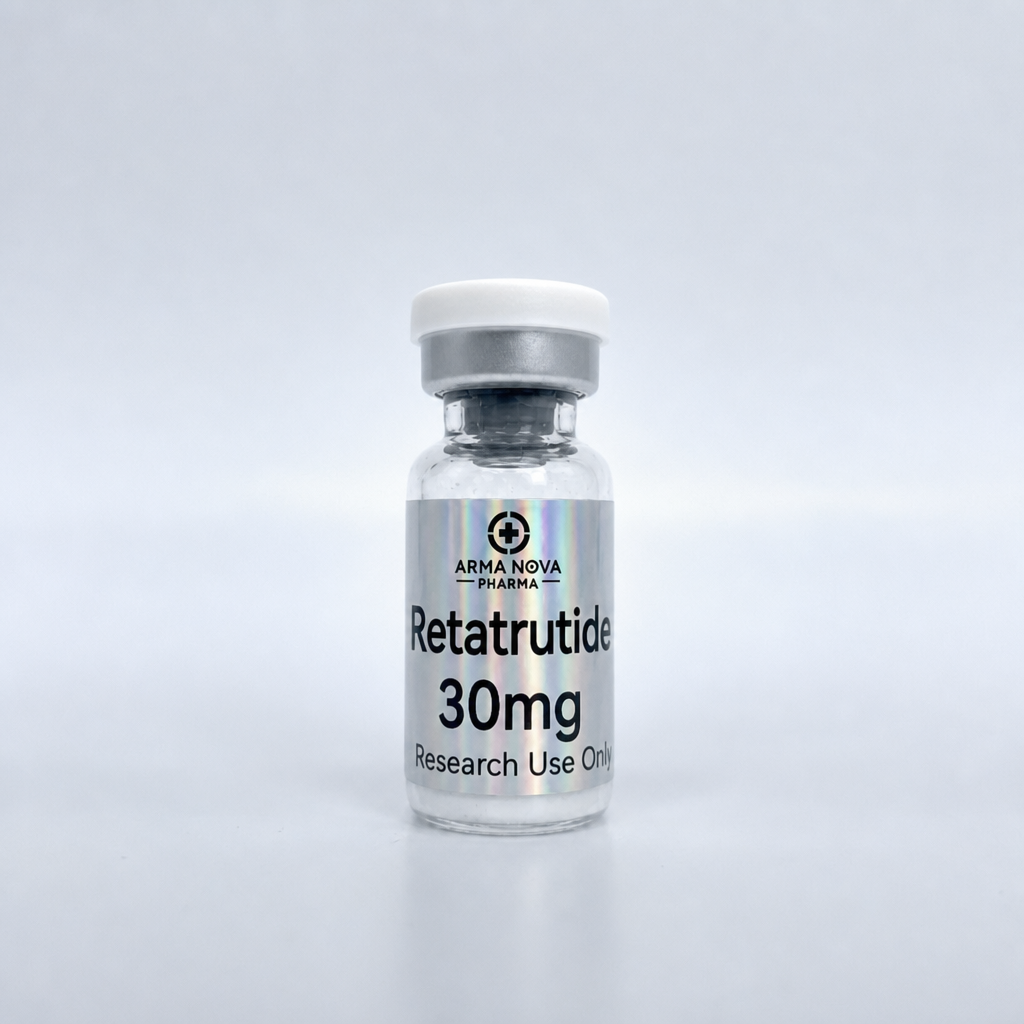
That premium reflects both limited manufacturing scale and the compound’s status as the first triple-receptor agonist targeting GLP-1, GIP, and glucagon pathways simultaneously—a pharmacological profile no other peptide in this class can match. For UK-based researchers and informed biohackers evaluating retatrutide procurement, understanding what drives the cost structure, how to verify purity claims, and where the clinical evidence currently stands matters far more than chasing the lowest headline number.
Why Retatrutide Costs More Than Tirzepatide or Semaglutide
Retatrutide (LY3437943) is structurally distinct from both dual agonists like tirzepatide and single-receptor agonists like semaglutide. It incorporates a 39-amino-acid sequence with fatty acid modifications enabling triple agonism across GLP-1, GIP, and glucagon receptors. The glucagon receptor component is the critical differentiator: activation drives hepatic fat oxidation, increased energy expenditure, and thermogenesis—mechanisms absent in dual or single agonists.
Manufacturing complexity directly impacts the retatrutide UK price. The peptide requires precision synthesis to maintain receptor selectivity across three distinct targets without off-target binding. Smaller production batches, stricter quality control thresholds, and limited commercial-scale manufacturing (Eli Lilly holds the investigational new drug status) keep per-milligram costs elevated compared to more widely synthesised analogs.
From a procurement perspective, this means legitimate retatrutide cannot realistically be priced at parity with semaglutide. Suppliers offering 30mg vials below £100 should raise immediate red flags regarding purity verification, amino acid sequence integrity, or accurate peptide content per vial.
Retatrutide UK Price Benchmarking: 30mg Vial Costs
UK researchers typically encounter three pricing tiers when sourcing Retatrutide 30mg UK:
| Supplier Category | Price Per 30mg Vial (GBP) | Purity Verification | Risk Profile |
|---|---|---|---|
| Verified UK/EU suppliers with published COAs | £125–£180 | HPLC ≥99%, batch-specific COAs, NMR/MS available | Low—traceable chain of custody |
| Generic research chemical vendors | £90–£120 | Generic COA (non-batch-specific) or absent | Moderate—sequence/purity uncertain |
| Unverified international dropshippers | £50–£85 | None or fabricated documents | High—likely underdosed or misrepresented compound |
The retatrutide UK price differential between verified and unverified sources isn’t arbitrary markup—it reflects the cost of independent third-party HPLC testing (£300–£600 per batch), proper lyophilisation infrastructure, and regulatory compliance with UK research chemical supply standards. Under UK law, retatrutide is sold strictly for in vitro research use only, not approved for human administration outside clinical trials.
Phase 2 Trial Data: What the 24.2% Weight Loss Figure Actually Means
The landmark study driving retatrutide’s profile—and indirectly influencing its market positioning—was published by Jastreboff et al. (2023) in the New England Journal of Medicine (PMID: 37350954). This 48-week, phase 2, dose-ranging trial enrolled 338 adults with obesity (BMI ≥30) but without diabetes, randomising participants to placebo or one of four retatrutide doses: 1mg, 4mg, 8mg, or 12mg administered subcutaneously once weekly.
Primary endpoint results at 24 weeks:
- Placebo: −1.6% body weight reduction
- 1mg retatrutide: −8.7%
- 4mg: −17.3%
- 8mg: −22.8%
- 12mg: −24.2%
At 48 weeks, the 12mg cohort sustained −24.2% mean weight reduction. This exceeds published phase 3 data for semaglutide 2.4mg (−14.9% at 68 weeks; Lincoff et al., 2023, PMID: 37952131) and tirzepatide 15mg (−20.9% at 72 weeks) by clinically meaningful margins.
However, three caveats matter when interpreting this figure in relation to retatrutide UK price expectations:
- Dropout rates: 17% of the 12mg cohort discontinued due to adverse events (primarily gastrointestinal), versus 2.4% in the placebo arm. Tolerability at the highest dose remains a limiting factor.
- Mechanism ambiguity: The trial design doesn’t isolate how much of the effect derives from glucagon agonism versus GLP-1/GIP synergy. Hepatic fat reduction was observed (−42% relative change in liver fat content via MRI-PDFF), suggesting glucagon-mediated thermogenesis contributes materially, but the individual receptor contributions remain unquantified.
- Glycemic context: Participants were non-diabetic at baseline. Glucagon agonism raises theoretical concerns about hyperglycemia in insulin-resistant populations, though fasting glucose remained stable or improved across all retatrutide arms.
The Jastreboff trial establishes retatrutide’s potential superiority in adiposity reduction, justifying researcher interest and the associated retatrutide UK price premium. It does not yet provide long-term cardiovascular outcome data or real-world effectiveness outside controlled trial conditions.
Glucagon Receptor Agonism: The Mechanistic Rationale for Triple Targeting
Understanding why retatrutide costs more requires grasping what glucagon receptor activation adds to the GLP-1/GIP foundation.
GLP-1 agonism: Delays gastric emptying, suppresses appetite centrally via hypothalamic signaling, and enhances glucose-dependent insulin secretion. This is the shared backbone of semaglutide, liraglutide, and all approved GLP-1 receptor agonists.
GIP agonism: Co-activation of glucose-dependent insulinotropic polypeptide receptors (as in tirzepatide) enhances insulin sensitivity, reduces inflammation in adipose tissue, and may mitigate some GLP-1-mediated nausea through CNS pathways. Dual agonism yields additive weight loss versus GLP-1 monotherapy.
Glucagon receptor agonism: This third arm drives:
- Hepatic fat oxidation: Glucagon signals hepatocytes to mobilise stored triglycerides for beta-oxidation, directly addressing non-alcoholic fatty liver disease (NAFLD) pathology.
- Thermogenesis: Increases resting energy expenditure by 5–8% in preclinical models, a metabolic effect neither GLP-1 nor GIP agonism reliably produces.
- Lipolysis upregulation: Enhances adipose tissue breakdown independent of caloric restriction.
The Jastreboff trial demonstrated a −42% relative reduction in hepatic fat content (MRI-PDFF measured) in the 8mg and 12mg retatrutide arms versus −2% with placebo—a magnitude not seen with semaglutide or tirzepatide monotherapy in comparable populations. This likely reflects direct glucagon-mediated hepatic effects rather than secondary weight loss.
From a procurement angle, this mechanistic distinction explains why retatrutide is sought by researchers specifically investigating hepatic steatosis or energy expenditure pathways, not merely replicating GLP-1 weight loss studies. The retatrutide UK price reflects demand from this narrower, technically sophisticated buyer segment.
HPLC Verification and COA Requirements: Non-Negotiable Quality Markers
Given the retatrutide UK price range, purity verification is the single most important due diligence step. Retatrutide’s 39-amino-acid sequence and lipid modifications create multiple points of synthesis failure—truncated sequences, racemisation at chiral centres, or lipid chain mispositioning can all yield a compound that retains partial GLP-1 activity (giving subjective appetite suppression) while losing glucagon receptor potency.
Minimum COA standards for retatrutide procurement:
- Batch-specific HPLC chromatogram: Must show ≥99% purity with a single dominant peak. Generic “representative” COAs are insufficient.
- Mass spectrometry (MS) confirmation: Verifies molecular weight matches theoretical MW of 4,622 Da for intact retatrutide. Sequence errors typically manifest as MW deviations of 50+ Da.
- Peptide content assay: Quantifies actual peptide mass per vial. A “30mg” vial may contain only 22–24mg of actual peptide if the lyophilised powder includes excipients or residual solvents. Legitimate suppliers report peptide content as a percentage (e.g., “≥98% peptide content by mass”).
- Endotoxin testing (LAL assay): Bacterial endotoxin contamination is common in lower-tier peptide synthesis. LAL results should show <10 EU/mg.
Arma Peptides publishes batch-specific COAs for each Retatrutide 30mg UK lot, accessible via QR code on the vial label. This transparency is standard among reputable UK suppliers but absent in the sub-£100 price tier, where COAs are frequently recycled across multiple batches or fabricated entirely.
UK Delivery, Customs, and Regulatory Context
Retatrutide is not a controlled substance under the Misuse of Drugs Act 1971, nor is it a prescription-only medicine under the Human Medicines Regulations 2012. It occupies the regulatory category of a research chemical, legally supplied within the UK for in vitro or ex vivo research purposes only.
Practical implications for UK buyers:
- Domestic UK suppliers: Orders ship via Royal Mail Tracked 24 or DHL with 1–2 business day delivery. No customs clearance required. This is the lowest-risk procurement route and the primary justification for accepting the retatrutide UK price premium over international sources.
- EU suppliers post-Brexit: Parcels may face customs inspection. Peptides are permissible for research import, but delays of 3–7 days are common. Suppliers should provide EORI numbers and commercial invoices declaring “research chemical—not for human consumption.”
- Non-EU international suppliers: Significantly higher seizure risk. HM Revenue & Customs and the MHRA increasingly scrutinise peptide imports from China, India, and unverified US vendors. Even if cleared, import VAT (20%) and handling fees (£8–£12) erode any headline price advantage.
For time-sensitive research or institutional procurement (universities, private labs), the retatrutide UK price from domestic suppliers includes the implicit cost of regulatory compliance and reliable delivery—factors that collapse when sourcing from jurisdictions with opaque export controls.
Cost Per Milligram Comparison: Retatrutide vs Tirzepatide vs Semaglutide
Calculating cost-effectiveness requires normalising the retatrutide UK price to per-milligram terms and contextualising dosing protocols from published literature.
| Peptide | Typical UK Price (30mg Vial) | Cost Per mg | Effective Dose Range (Weekly) | Weekly Cost (Mid-Range Dose) |
|---|---|---|---|---|
| Retatrutide | £125–£180 | £4.17–£6.00 | 4–12mg | £33–£48 (8mg dose) |
| Tirzepatide | £85–£110 | £2.83–£3.67 | 5–15mg | £28–£37 (10mg dose) |
| Semaglutide | £45–£65 | £1.50–£2.17 (per mg from 30mg vial) | 1–2.4mg | £3.00–£5.20 (2mg dose) |
Retatrutide’s cost per milligram is 40–60% higher than tirzepatide and approximately triple semaglutide’s. However, direct cost comparison is reductive: the compounds are not functionally equivalent. Semaglutide produces −14.9% weight loss at 2.4mg weekly over 68 weeks; retatrutide achieves −24.2% at 12mg weekly over 48 weeks. The incremental 9.3 percentage points of weight reduction comes at an incremental weekly cost of approximately £28–£43 over semaglutide (comparing mid-range effective doses).
For researchers prioritising hepatic fat reduction or metabolic rate modulation specifically, tirzepatide and semaglutide are not viable substitutes regardless of cost, as neither engages glucagon receptors. In that context, the retatrutide UK price is not being benchmarked against dual or single agonists—it’s the only option in its pharmacological class.
Where to Buy Retatrutide in the UK: Supplier Red Flags and Green Flags
Identifying legitimate retatrutide suppliers in a market flooded with dropshippers and relabelers requires systematic vetting. The retatrutide UK price alone is an insufficient signal—both overpriced low-quality product and underpriced counterfeit product exist.
Green flags (reliable supplier indicators):
- Batch-specific COAs with visible HPLC chromatograms: Not PDFs with the batch number photoshopped in, but genuine third-party lab reports matching the vial lot number.
- Published peptide content percentage: Transparent disclosure that a “30mg” vial contains, e.g., 29.4mg of actual peptide (98% content). Vague “≥98% purity” claims without peptide content figures are evasive.
- UK company registration and contact details: Verifiable Companies House registration number, UK phone number, and physical address (not a virtual office or PO box).
- Transparent synthesis origin: Reputable suppliers disclose whether peptides are synthesised in EU/UK GMP facilities or imported from verified Chinese manufacturers with audited quality systems.
- No medical claims: Legitimate research suppliers never claim retatrutide “treats obesity” or provide dosing advice for human use, as this violates UK advertising and medicines regulations.
Red flags (avoid these suppliers):
- Retatrutide UK price significantly below £110 per 30mg without explanation (gray-market repackaging or mislabeled product likely).
- Generic COAs showing identical HPLC peaks across multiple peptides or batches (forged documents).
- No published contact information beyond a Gmail address or Telegram handle.
- Marketing language referencing “fat loss,” “clinical results,” or “safe for human use” (regulatory non-compliance indicates broader quality control failures).
- Cryptocurrency-only payment with no escrow or recourse mechanism.
Arma Peptides operates as a UK-registered supplier with transparent third-party testing, domestic fulfillment, and publicly accessible COAs. Each vial includes verification that the compound meets ≥99% HPLC purity thresholds and documented peptide content, with delivery typically completed within 48 hours across the UK.
Reconstitution, Storage, and Practical Handling Considerations
Retatrutide arrives as a lyophilised powder requiring reconstitution with bacteriostatic water before use. Proper handling directly impacts peptide stability and, by extension, whether the retatrutide UK price translates to usable product or degraded waste.
Reconstitution protocol:
- Use bacteriostatic water (0.9% benzyl alcohol), not sterile water, if the reconstituted solution will be stored beyond 24 hours.
- Add 2ml–3ml bacteriostatic water to a 30mg vial, yielding a concentration of 10–15mg/ml.
- Inject water slowly down the vial wall, avoiding direct spray onto the lyophilised puck, which can denature the peptide.
- Swirl gently—do not shake. Vigorous agitation disrupts tertiary structure and reduces receptor binding affinity.
- Allow 2–3 minutes for complete dissolution before drawing.
Storage requirements:
- Lyophilised powder: Store at −20°C for up to 24 months. Avoid repeated freeze-thaw cycles.
- Reconstituted solution: Refrigerate at 2–8°C. Bacteriostatic water extends stability to approximately 28 days. Beyond this window, HPLC purity declines measurably (oxidation at methionine residues and deamidation are common degradation pathways).
- Transport: If shipping reconstituted retatrutide (e.g., for collaborative research), use insulated packaging with gel ice packs maintaining 2–8°C for the transit duration. Temperature excursions above 15°C for >6 hours cause irreversible aggregation.
Improper handling is the most common reason researchers report suboptimal results despite paying the full retatrutide UK price for verified product. Degraded peptide retains partial GLP-1 activity (appetite suppression remains subjectively noticeable) but loses glucagon receptor potency first—meaning the unique triple-agonist mechanism degrades asymmetrically.
Retatrutide Phase 3 Trials and Future Price Trajectory
Eli Lilly initiated two phase 3 trials in 2023:
- TRIUMPH-1: Retatrutide versus placebo in adults with obesity, primary completion estimated Q2 2026.
- TRIUMPH-2: Retatrutide versus placebo in adults with obesity and obstructive sleep apnea, estimated completion Q4 2026.
If phase 3 data replicates the Jastreboff phase 2 outcomes (−24.2% weight loss sustained over 48 weeks) and achieves regulatory approval from the MHRA and EMA by 2027–2028, two pricing scenarios emerge:
Scenario 1 (prescription approval): Retatrutide becomes a prescription-only medicine. Research chemical suppliers exit the market. Pharmaceutical pricing in the UK defaults to NHS negotiation, likely resulting in per-dose costs of £200–£300 for a month’s supply (4 weekly injections at 8–12mg). This mirrors tirzepatide’s NHS pricing trajectory post-approval.
Scenario 2 (delayed or limited approval): If cardiovascular safety concerns emerge (glucagon agonism theoretically increases heart rate and may elevate blood pressure in susceptible individuals) or gastrointestinal tolerability limits real-world adherence, retatrutide remains investigational. Research peptide suppliers continue distribution, but increased manufacturing scale and competitive synthesis could reduce the retatrutide UK price to £90–£120 per 30mg by 2027.
For UK researchers planning multi-year studies, current procurement at £125–£180 per vial may represent the lowest cost window before either regulatory restriction or pharmaceutical monopoly pricing takes effect.
Comparing Retatrutide to Emerging Quad-Agonists and Oral GLP-1s
Retatrutide’s market positioning isn’t static. Two emerging pharmacological classes may challenge its risk-reward calculus:
Oral GLP-1 agonists (e.g., oral semaglutide, danuglipron): These offer dosing convenience and eliminate injection site reactions, but bioavailability remains problematic (oral semaglutide achieves only 0.4–1% absorption, requiring daily dosing and strict administration protocols). None currently match injectable retatrutide’s efficacy. From a cost perspective, oral formulations may eventually underprice injectables, but as of 2026, no oral agent has demonstrated >18% weight loss in phase 3 trials.
Quad-agonist peptides (GLP-1/GIP/glucagon/GCG analogs): In preclinical development, these add galanin or other receptor targets to the triple-agonist backbone. Early rodent data suggests potential for 28–32% body weight reduction, but no human trials have commenced. If a quad-agonist reaches phase 2 by 2027–2028, it could obsolete retatrutide’s premium positioning, collapsing the retatrutide UK price as demand shifts.
For researchers evaluating whether to commit to retatrutide protocols now, the relevant comparison isn’t just against existing dual agonists—it’s against the 24–36 month pipeline of next-generation metabolic peptides that may offer superior efficacy at comparable or lower cost.
Final Procurement Recommendations: When Retatrutide Justifies Its Price
The retatrutide UK price of £125–£180 per 30mg is justifiable under three specific conditions:
- Research objectives specifically require glucagon receptor engagement: Hepatic fat metabolism studies, NAFLD/NASH models, or thermogenesis research cannot substitute tirzepatide or semaglutide regardless of cost. In these contexts, retatrutide is not a premium option—it’s the only relevant option.
- Maximum weight reduction is the primary endpoint: If a study or personal biohacking protocol prioritises achieving the largest possible adiposity change, retatrutide’s 9.3 percentage point advantage over semaglutide (24.2% vs 14.9% at maximum tolerated doses) justifies the £28–£43 weekly cost increment.
- Verified purity is non-negotiable: Institutional research requiring published COAs, batch traceability, and regulatory audit trails has no alternative to paying verified supplier pricing. The £55–£80 cost difference between verified and unverified retatrutide isn’t markup—it’s the cost of documented quality control and supply chain transparency.
Conversely, the retatrutide UK price is not justified if:
- The research question is answerable with Semaglutide UK (GLP-1-only mechanisms).
- Budget constraints require prioritising dose frequency over compound novelty (tirzepatide offers 80–85% of retatrutide’s weight loss effect at 60% of the cost).
- The supplier cannot provide batch-specific third-party COAs—regardless of the quoted price, unverified retatrutide has no measurable value.
Arma Peptides maintains transparent per-vial pricing at the upper-middle range (£125–£150 depending on order volume), reflecting UK-based fulfillment, published batch testing, and regulatory compliance. For researchers requiring documented chain-of-custody and reliable delivery timelines, this positions as the risk-adjusted optimal procurement route despite the existence of nominally cheaper international alternatives.
Understanding the True Cost: Retatrutide UK Price Beyond the Vial
The headline retatrutide UK price per vial is only one component of total research cost. A complete economic analysis must include:
- Reconstitution supplies: Bacteriostatic water (£8–£12 per 30ml), insulin syringes if sub-milligram dosing is required (£6–£10 per 100-count box), and alcohol swabs.
- Storage infrastructure: Pharmaceutical-grade refrigeration maintaining 2–8°C (if not already available, £150–£300 for a dedicated unit). Freezer space at −20°C for long-term powder storage.
- Waste disposal: Sharps containers and compliance with UK clinical waste regulations if institutional procurement (£15–£25 per disposal cycle).
- Potential re-testing: If supplier COAs are questioned, independent third-party HPLC testing costs £350–£600 per sample.
For a 12-week research protocol at 8mg weekly dosing (96mg total retatrutide required), total cost breaks down as:
- Peptide: 3.2 vials × £140 = £448
- Reconstitution supplies: £25
- Storage (amortised): £15
- Total: £488, or £40.67 per week
This contextualises the retatrutide UK price within the broader experimental budget. For comparison, a 12-week tirzepatide protocol at 10mg weekly would cost approximately £336 all-in (£28 per week), while semaglutide at 2mg weekly would run £62 total (£5.17 per week). The cost multiple is 8-fold versus semaglutide and 1.45-fold versus tirzepatide.
Whether that multiple is justified depends entirely on whether the research question requires glucagon receptor engagement or whether the 4.3 percentage point weight loss advantage over tirzepatide (24.2% vs 20.9%) is scientifically meaningful for the study design. Cost should never be the sole deciding factor, but neither should it be ignored when pharmacologically similar alternatives exist.
Disclaimer: Retatrutide is supplied in the UK strictly for in vitro research purposes under applicable UK legislation. It is not approved for human administration, veterinary use, or therapeutic application outside approved clinical trials. This article provides scientific and procurement information for qualified researchers and does not constitute medical advice, dosing recommendations, or encouragement of off-label use. Researchers are responsible for ensuring compliance with institutional review boards, UK Home Office licensing (where applicable), and all relevant regulatory frameworks governing peptide research.

Add comment