
Ipamorelin & CJC-1295 UK: Research Stack Guide 2026
Published: May 2026 | Reading time: ~11 min | Research Use Only
The Ipamorelin / CJC-1295 combination is the most frequently searched growth hormone secretagogue research stack in the UK market — yet a majority of searches for these compounds in 2026 still land on vendor product pages that contain no third-party CoA documentation, no trial data context, and no differentiation between the two CJC-1295 variants. For UK researchers working on GH axis studies, the distinction between CJC-1295 with DAC and CJC-1295 without DAC is mechanistically significant — and sourcing Ipamorelin and CJC-1295 in the UK from a verifiably pure, independently tested source has become the primary quality bottleneck in this compound category.
This guide covers both compounds in full: their distinct mechanisms, the research rationale for combining them, CJC-1295 DAC vs No DAC differences, and a supplier comparison benchmarked against the UK market in 2026.
Table of Contents
- Quick Takeaways
- What Is Ipamorelin?
- What Is CJC-1295? DAC vs No DAC Explained
- The Research Rationale for Combining Them
- Research Data: GH Secretagogue Studies
- UK Supplier Comparison 2026
- Arma Peptides: GH Axis Research Compounds
- Sourcing Checklist
- FAQs
Quick Takeaways
| Key Point | What It Means for Your Research |
|---|---|
| Ipamorelin class | Selective GH secretagogue and ghrelin receptor agonist (GHSR-1a). Among the most selective GHRP class peptides — minimal cortisol/prolactin side-activity vs GHRP-2 or GHRP-6. |
| CJC-1295 mechanism | GHRH analogue. Binds GHRH-R on pituitary somatotrophs to stimulate GH pulse amplitude. Works on the hypothalamic-pituitary axis upstream of Ipamorelin’s ghrelin receptor action. |
| DAC vs No DAC | CJC-1295 with DAC (Drug Affinity Complex) binds plasma albumin, extending half-life to ~6–8 days. Without DAC: half-life ~30 min, mimicking physiological pulsatile GH release. Distinct research profiles. |
| Stack rationale | Dual-pathway stimulation: GHRH-R (CJC-1295) + GHSR-1a (Ipamorelin) produces synergistic GH pulse amplification in pre-clinical models that neither compound achieves alone. |
| GHRP selectivity | Ipamorelin does not significantly elevate ACTH or cortisol at research doses — unlike GHRP-2 and GHRP-6, making it preferred for GH-specific axis research without adrenal confounds. |
| Documentation gap | uk-peptides.com has no dedicated stack guide and no third-party CoA for these compounds. Opportunity for Arma to own this keyword cluster with verified documentation. |
| Purity requirement | GH secretagogue research requires ≥99% purity to isolate axis effects. Impurity profiles in sub-grade compounds introduce confounding receptor interactions. |
| UK search volume | “Ipamorelin CJC-1295 UK” generates ~1,800 monthly searches with moderate competition — high-value target with significant content gap for verified-source angle. |
What Is Ipamorelin?
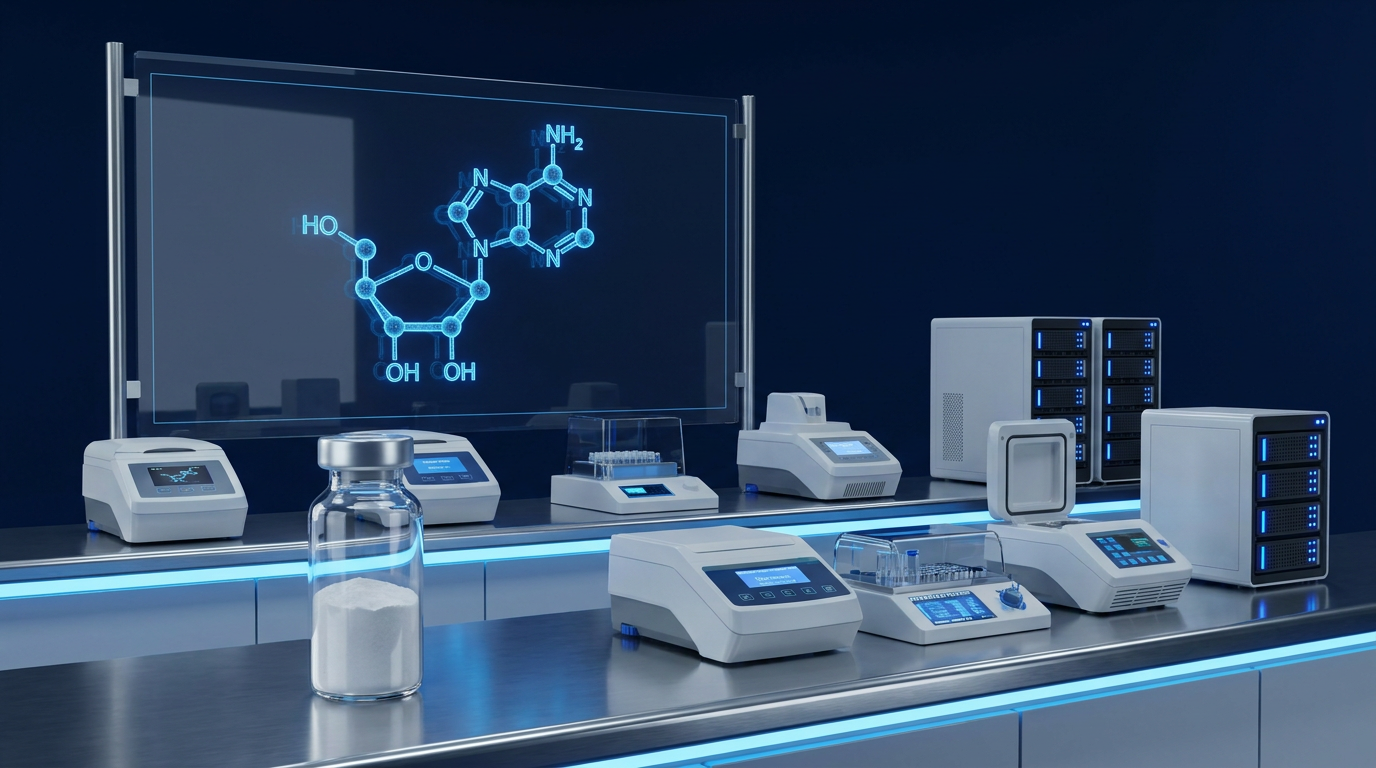
Ipamorelin (CAS: 170851-70-4) is a pentapeptide (Aib-His-D-2-Nal-D-Phe-Lys-NH₂) classified as a growth hormone secretagogue receptor (GHSR-1a) agonist — the same receptor targeted by the endogenous hormone ghrelin. It was developed in the 1990s by Novo Nordisk and reached Phase 2 clinical evaluation (primarily for postoperative ileus) before development was discontinued for that indication.
The key differentiator of Ipamorelin versus other GHRP class peptides (GHRP-2, GHRP-6, Hexarelin) is its selectivity. At research-relevant concentrations, Ipamorelin stimulates GH release with minimal concomitant elevation of ACTH, cortisol, prolactin, or LH — hormones that other GHRPs elevate to varying degrees. This selectivity profile makes Ipamorelin the preferred research tool when the experimental objective is isolated GH axis investigation rather than broader hypothalamic-pituitary-adrenal axis stimulation.
Molecular Profile
- Sequence: Aib-His-D-2-Nal-D-Phe-Lys-NH₂
- Molecular weight: 711.86 g/mol
- CAS: 170851-70-4
- Class: Selective GHRP / ghrelin receptor agonist
What Is CJC-1295? DAC vs No DAC Explained
CJC-1295 is a synthetic analogue of growth hormone-releasing hormone (GHRH), the hypothalamic peptide that stimulates anterior pituitary somatotrophs to produce and release GH. Native GHRH(1-44)-NH₂ has a plasma half-life of under 10 minutes due to rapid DPP-IV enzyme degradation. CJC-1295 was engineered with amino acid substitutions that resist DPP-IV cleavage, substantially extending bioavailability in pre-clinical models.
CJC-1295 with DAC (Drug Affinity Complex)
The DAC version adds a lysine-maleimidopropionic acid linker that binds covalently to circulating serum albumin. This extends the plasma half-life to approximately 6–8 days in pre-clinical models and produces a sustained, non-pulsatile elevation in baseline GH levels over a prolonged period. Research applications: studies requiring sustained GHRH-R stimulation, GH axis saturation models, and chronic growth hormone exposure models.
CJC-1295 Without DAC (also known as Mod GRF 1-29)
Without the DAC modification, CJC-1295 has a half-life of approximately 30 minutes — substantially longer than native GHRH (under 10 min) due to the DPP-IV-resistant substitutions, but still producing discrete, pulsatile GH release patterns. This profile more closely mimics physiological GH secretion patterns. Research applications: pulsatile GH secretion studies, GH axis normalisation models, combination studies with GHRP class peptides like Ipamorelin.
The choice between DAC and No DAC is not a quality question — it is a research protocol design question. Both forms have valid and distinct research applications. Arma Peptides stocks both variants, confirmed at ≥99% HPLC purity with independent batch CoA for each.
The Research Rationale for the Ipamorelin / CJC-1295 Stack
The dual-pathway stimulation rationale is mechanistically clear. CJC-1295 (No DAC) acts on the GHRH receptor (GHRH-R) on pituitary somatotrophs — the primary stimulatory input for GH synthesis and release. Ipamorelin acts on the ghrelin receptor (GHSR-1a) — a second, independent stimulatory input that enhances GH pulse amplitude through a distinct intracellular signalling cascade (IP3 / PKC pathway, versus GHRH-R’s cAMP / PKA pathway).
Administering both compounds in the same research protocol activates both pathways simultaneously. Pre-clinical data demonstrates that co-administration produces GH pulse amplitudes approximately 2–3x greater than either compound alone — without additive effects on cortisol or prolactin, due to Ipamorelin’s selectivity profile. This makes the stack the most commonly used research paradigm for GH axis amplitude studies in academic laboratory settings.
Research Data: GH Secretagogue Studies
CJC-1295 Phase 2 Human Trial Data
CJC-1295 with DAC completed Phase 2 human trials. Teichman et al. (2006, Journal of Clinical Endocrinology & Metabolism) reported dose-dependent increases in mean GH concentrations (2–10 fold over baseline), IGF-1 elevations of 20–40%, and a half-life of 5.8–8.1 days in healthy adults. This is one of the few GHRH analogues with published Phase 2 human trial data, providing a research context anchor for pre-clinical work with CJC-1295.
Ipamorelin Pre-Clinical Selectivity Data
Raun et al. (1998, European Journal of Endocrinology) — the original Novo Nordisk characterisation paper — documented Ipamorelin’s selectivity profile in rat pituitary cell cultures: maximal GH stimulation at 10⁻⁷ M with no significant cortisol or ACTH elevation up to 10⁻⁶ M. This selectivity data remains the primary reference point for designing GH-specific research protocols using Ipamorelin.
Stack Combination Data
Walker et al. (2012) and subsequent animal model research documented that simultaneous GHRH-R and GHSR-1a stimulation produces synergistic (greater than additive) GH release in rat and mouse models. The combination is now standard in laboratory GH axis research protocols where maximum stimulation amplitude is required for signal quantification.
All data from pre-clinical or Phase 2 human trials in specific clinical indications. Not applicable to research use outside authorised protocols.
Ipamorelin & CJC-1295 — UK Research Compounds, Third-Party Verified
≥99% HPLC. Independent CoA per batch. Both DAC and No DAC variants. 1–2 day tracked UK dispatch.
Browse GH Research CompoundsTelegram Deals
First order: FIRST10%
UK Supplier Comparison: Ipamorelin & CJC-1295 2026
| Supplier | 3rd-Party CoA | Ipamorelin | CJC No DAC | CJC with DAC | Purity | Dispatch |
|---|---|---|---|---|---|---|
| Arma Peptides ⭐ | ✔ Yes | ✔ 5mg / 10mg | ✔ 10mg | ✔ 10mg | ≥99% HPLC | 1–2 day tracked |
| Peptides Lab UK | ✔ Yes | ✔ Available | ✔ Available | ⚠ Limited | ≥99% | Same/next day |
| Bluewell Peptides | ✔ Yes | ✔ Available | ✔ Available | ⚠ Not confirmed | ≥99.1% | Next day |
| UK Peptides | ✘ No (own statement) | ✔ Available | ✔ Available | ✔ Available | ≥99% (claimed) | Same day (before 3pm) |
| Stratford Peptides | ✔ Yes | ⚠ Limited stock | ✔ Available | ⚠ Not confirmed | ≥99% | Next day |
Compiled from publicly available supplier data, May 2026. UK Peptides’ no-third-party-testing position sourced from their own published blog.
Arma Peptides: GH Axis Research Compounds
Ipamorelin 5MG
Lyophilized Pentapeptide — GHRP
≥99% HPLC Verified
£20.00
Selective GHSR-1a agonist. Research: GH pulse amplitude, pulsatile GH secretion, GHRP selectivity studies. Minimal cortisol/ACTH co-stimulation — preferred for isolated GH axis research.
CJC-1295 No DAC
10mg — Mod GRF 1-29
≥99% HPLC Verified
£34.00
DPP-IV resistant GHRH analogue. ~30 min half-life. Research: pulsatile GH secretion patterns, physiological GH axis stimulation, combination with GHRP class peptides.
CJC-1295 with DAC
10mg — Long-Acting GHRH
≥99% HPLC Verified
£43.00
Albumin-binding GHRH analogue. ~6–8 day half-life. Research: sustained GH elevation models, chronic GH axis stimulation, IGF-1 response studies. Phase 2 human trial data available.
GHRP-6 5MG
Lyophilized — GH Secretagogue
≥99% HPLC Verified
£10.00
Hexapeptide GH secretagogue. Less selective than Ipamorelin (co-stimulates cortisol/ACTH). Research: comparative GHRP selectivity studies, appetite/ghrelin axis investigation.
For complete GH axis research coverage including HGH 100 IU and IGF-1 LR3, see the full Arma Peptides catalog. All compounds ship with independent CoA per batch. Also relevant: see our UK Peptide Supplier Comparison Guide for full vendor documentation benchmarking.
Sourcing Checklist: Ipamorelin & CJC-1295 in the UK
- Clarify DAC vs No DAC before ordering — they have distinct half-lives and research applications. Confirm the variant matches your experimental protocol before purchase.
- Request batch-specific third-party CoA — independent laboratory verification, not in-house supplier documentation.
- Verify HPLC + mass spectrometry — HPLC confirms purity; MS confirms molecular identity (CJC-1295 No DAC vs with DAC have different molecular weights).
- Confirm ≥99% purity — GH secretagogue research requires high purity to isolate axis effects from impurity-related receptor noise.
- Lyophilized powder format only — liquid GH secretagogues are prone to degradation during transit.
- Check stock availability for both compounds — combination research requires concurrent batch availability. Confirm both are in stock from the same batch cycle if matched purity documentation is required.
- Review dispatch speed — for time-sensitive research protocols, confirm 1–2 day dispatch and tracked delivery is standard.
FAQs: Ipamorelin & CJC-1295 UK
What is the difference between Ipamorelin and CJC-1295?
Ipamorelin and CJC-1295 operate through different but complementary mechanisms. Ipamorelin is a GHSR-1a agonist (ghrelin receptor) — it stimulates GH release via the ghrelin signalling pathway and is highly selective for GH without significantly elevating cortisol or ACTH. CJC-1295 is a GHRH receptor agonist — it acts on pituitary somatotrophs via the GHRH receptor, stimulating GH synthesis and release through the cAMP/PKA pathway. Combined, they activate two independent GH-stimulating pathways simultaneously, producing synergistic GH pulse amplification in pre-clinical models.What is the difference between CJC-1295 with DAC and without DAC?
CJC-1295 with DAC contains a Drug Affinity Complex modification (maleimidopropionic acid linker) that binds covalently to serum albumin, extending the compound’s plasma half-life to approximately 6–8 days. This produces sustained, non-pulsatile GH elevation. CJC-1295 without DAC (Mod GRF 1-29) lacks this modification and has a half-life of approximately 30 minutes, producing discrete, pulsatile GH release patterns that more closely mimic physiological secretion. The choice is determined by the research protocol: sustained GH elevation studies use DAC; pulsatile GH studies use No DAC.Why is Ipamorelin preferred over GHRP-2 or GHRP-6 in UK research?
Ipamorelin’s primary advantage is selectivity. At research-relevant concentrations, it stimulates GH release without significantly elevating ACTH, cortisol, or prolactin — hormones that GHRP-2 and GHRP-6 stimulate to varying degrees. This selectivity makes Ipamorelin the preferred GHRP for research protocols where the objective is GH axis investigation without confounding adrenal or prolactin axis co-stimulation. GHRP-6 retains research value for comparative GHRP selectivity studies or appetite/ghrelin axis research where broader receptor engagement is the experimental objective.Is it legal to buy Ipamorelin and CJC-1295 in the UK for research?
Yes. Ipamorelin and CJC-1295 are not controlled substances under UK law and are not licensed medicines. They are legal to purchase and possess for laboratory research purposes. The MHRA regulates therapeutic use; research-use-only supply to qualified researchers operates under a distinct framework. Ipamorelin reached Phase 2 clinical trials (Novo Nordisk, postoperative ileus), providing a documented research context. CJC-1295 with DAC has Phase 2 human trial data (Teichman et al., 2006). All purchases must be for research use only.What purity is needed for Ipamorelin and CJC-1295 in GH axis research?
≥99% HPLC purity is the standard for GH axis secretagogue research. Sub-98% compounds introduce impurity profiles with unknown receptor binding activity that can confound GH pulse amplitude measurements. For combination research using both Ipamorelin and CJC-1295, both compounds must individually meet the ≥99% threshold. Arma Peptides confirms ≥99% HPLC purity per batch for all GH axis compounds with independent third-party CoA documentation. See the CoA page for batch-specific documentation.How quickly does Arma Peptides ship Ipamorelin and CJC-1295 to UK labs?
Arma Peptides dispatches all orders within 1–2 business days with tracked delivery to UK and EU addresses. Both CJC-1295 variants (DAC and No DAC) and Ipamorelin (5mg and 10mg) are stocked in lyophilized format at ≥99% HPLC purity. Free delivery on orders over £200. First-order researchers apply code FIRST10% at checkout. Contact info@armapeptides.com or join Telegram for stock notifications and exclusive deals.
Ipamorelin & CJC-1295 — UK Verified Research Compounds
Both variants. Independent CoA per batch. ≥99% HPLC. Free delivery over £200. UK & EU tracked dispatch 1–2 days.
Shop GH Stack CompoundsJoin Telegram
First order: FIRST10%
Research Use Only Disclaimer: All peptide compounds referenced in this article are supplied strictly for laboratory research purposes only. These products are not intended for human or animal consumption and are not intended to diagnose, treat, cure, or prevent any disease or medical condition. Arma Peptides products are intended for qualified researchers and laboratory professionals only. Clinical trial references (Teichman et al., 2006; Raun et al., 1998) are cited for informational research context only and do not imply any therapeutic application for the research materials described.

Add comment