
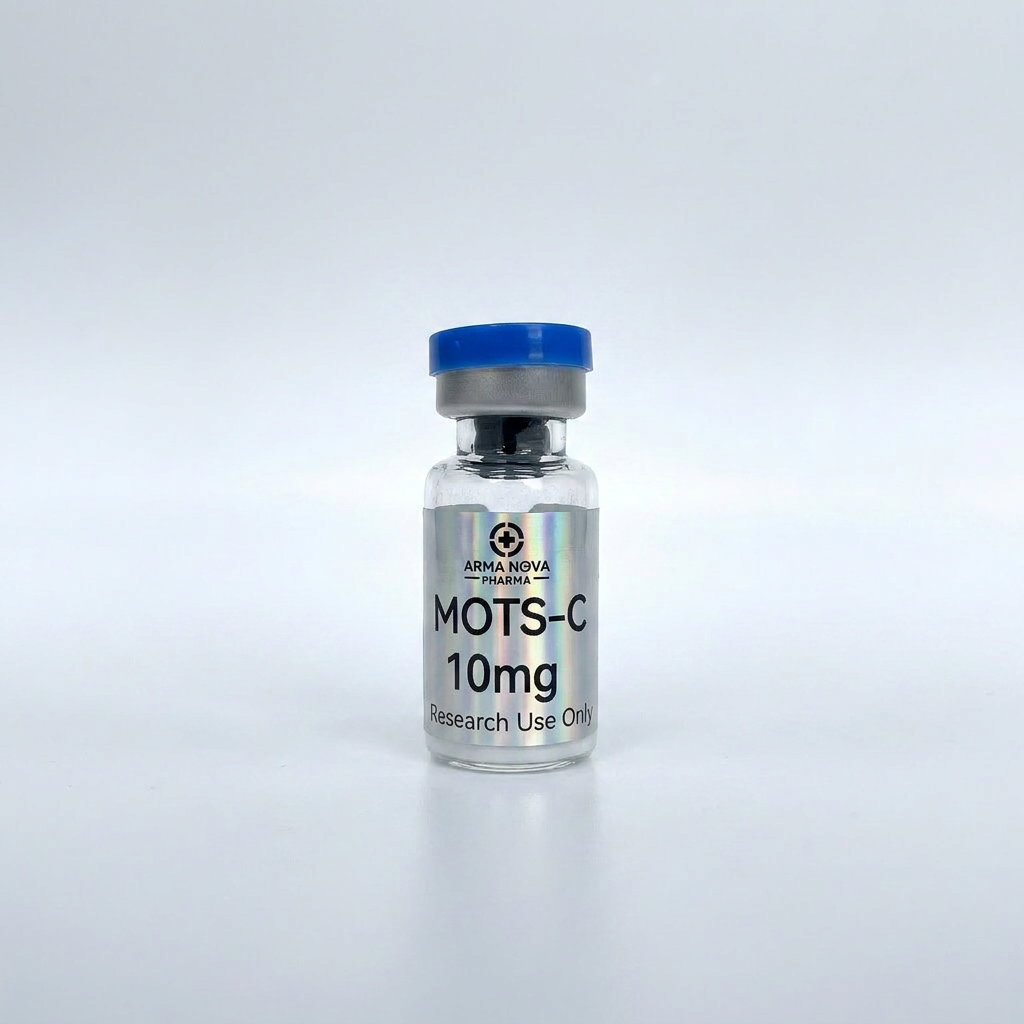
MOTS-C 10mg: Complete Research Guide to the Mitochondrial Peptide
Most peptides originate from nuclear DNA. MOTS-C is different. It is encoded within the mitochondrial genome itself — specifically within the 12S ribosomal RNA gene — making it one of the few known peptides of mitochondrial origin. That distinction is not merely academic. It positions MOTS-C as a research tool at the intersection of mitochondrial biology, metabolic signalling, and cellular energy regulation — areas of active investigation in diabetes research, anti-ageing science, and exercise physiology.
This guide covers what MOTS-C is, how it works at a molecular level, what the current research literature demonstrates, and how to source verified MOTS-C 10mg for laboratory research in the UK.
All compounds referenced are supplied strictly for laboratory research purposes only. Not for human or veterinary use.
—
What Is MOTS-C?
MOTS-C (Mitochondrial Open Reading Frame of the 12S rRNA Type-C) is a 16-amino-acid peptide encoded within the human mitochondrial genome. It was first characterised in 2015 by a team at the University of Southern California as part of an emerging class of mitochondria-derived peptides (MDPs) — molecules translated from the mitochondrial genome that function as systemic signalling agents.
Unlike nuclear-encoded peptides, MOTS-C is produced directly by mitochondria and can translocate from the mitochondrion to the cytoplasm, and — under stress conditions such as exercise or metabolic challenge — to the nucleus itself. This retrograde signalling capacity makes MOTS-C a uniquely positioned molecule for research into mitochondrial-nuclear communication.
In laboratory models, MOTS-C has been studied for its apparent influence on:
- AMPK (AMP-activated protein kinase) activation pathways
- Insulin sensitivity and glucose metabolism in skeletal muscle
- Folate cycle modulation and one-carbon metabolism
- Mitochondrial oxidative phosphorylation and ROS signalling
- Age-associated metabolic decline in rodent models
Circulating MOTS-C levels in humans decline with age and are reduced in individuals with insulin resistance and type 2 diabetes — observations that have driven significant academic interest in its potential therapeutic applications.
—
MOTS-C Mechanism of Action
AMPK Activation
MOTS-C’s primary intracellular mechanism involves inhibition of the folate cycle — a key pathway in one-carbon metabolism — which leads to AICAR accumulation and subsequent AMPK activation. AMPK is a master regulator of cellular energy homeostasis, governing glucose uptake, fatty acid oxidation, and mitochondrial biogenesis. MOTS-C-driven AMPK activation has been observed in skeletal muscle cell models and is one of the primary research targets for the compound.
Nuclear Translocation Under Stress
A 2025 study published in Frontiers in Physiology demonstrated that MOTS-C translocates to the nucleus under conditions of mitochondrial stress, where it directly regulates gene expression — an unusual capability for a peptide of this size. This nuclear import capacity suggests MOTS-C functions as a retrograde mitochondrial stress signal, alerting the nuclear gene expression machinery to mitochondrial states.
Insulin Sensitivity and Glucose Metabolism
Multiple preclinical studies have shown MOTS-C to improve insulin sensitivity in high-fat-diet rodent models. A 2023 PMC review highlighted that MOTS-C administration reduced insulin resistance and improved glucose tolerance in obese mice, effects correlated with AMPK activation in skeletal muscle and reduced systemic inflammation markers.
Mitochondrial Respiration
The same 2025 Frontiers in Physiology study found that MOTS-C-treated mitochondria showed increased oxidative phosphorylation (OXPHOS) respiration alongside modulated ROS levels — suggesting a role in fine-tuning mitochondrial respiratory efficiency rather than simply increasing output.
—
What Does the Research Show?
Metabolic Function Studies
The foundational 2015 research in Cell Metabolism established that MOTS-C regulates insulin sensitivity in skeletal muscle. Subsequent work has consistently replicated AMPK pathway engagement. A 2022 MDPI review covering MOTS-C across multiple age-related disease models noted beneficial effects in diabetes, cardiovascular disease, osteoporosis, and post-menopausal metabolic dysregulation in preclinical models.
Age-Related Decline
Circulating MOTS-C levels decrease with age in human populations. Rodent studies using exogenous MOTS-C administration in aged animals have shown improvements in physical performance, metabolic markers, and mitochondrial function. This age-decline correlation positions MOTS-C as a compound of considerable interest in ageing biology and longevity research.
Exercise and Skeletal Muscle
Exercise elevates endogenous MOTS-C levels in skeletal muscle. Research has examined this as a mechanism through which exercise confers metabolic benefit — with MOTS-C as a molecular mediator. Exogenous MOTS-C in exercise-related research models has been studied for its effects on muscle repair, mitochondrial density, and metabolic substrate utilisation.
Neuroprotective Pathways
The Alzheimer’s Drug Discovery Foundation has published research noting MOTS-C’s potential role in protecting against brain injury in LPS-induced sepsis models. While neuroprotective research is at an earlier stage than metabolic research, it broadens the compound’s relevance for researchers working on neuroinflammation and mitochondrial contributions to neurological decline.
—
MOTS-C 10mg for Laboratory Research
The 10mg format is the standard research quantity for MOTS-C. It provides sufficient material for multiple experimental runs while maintaining the single-batch consistency that longitudinal research designs require. When evaluating MOTS-C for laboratory use, the following should be confirmed:
- Purity level — HPLC-verified purity certificate (CoA) must accompany every batch
- Lyophilised format — peptide powder is more stable than pre-reconstituted formats for research storage
- Batch testing — identity, purity, and stability should all be documented
- UK source — reduces transit time and temperature exposure risk for sensitive peptide compounds
MOTS-C 10mg is available at Arma Peptides — produced to laboratory-grade standards, COA-verified, and dispatched from the UK for researchers across the United Kingdom and Europe.
View our full Certificate of Analysis documentation for purity verification before ordering.
—
MOTS-C Research Applications
Metabolic Disease Models
MOTS-C is actively researched in type 2 diabetes, obesity, and insulin resistance models. Its AMPK activation profile makes it a useful tool compound for researchers investigating metabolic pathway interventions at a cellular level.
Mitochondrial Biology Research
As one of the few peptides of mitochondrial origin, MOTS-C provides a unique research angle for labs studying mitochondrial-nuclear signalling, retrograde communication, and the role of mitochondria in systemic metabolic regulation beyond their classic role in ATP production.
Ageing and Longevity Studies
The age-associated decline in endogenous MOTS-C levels is a reproducible finding that makes it relevant to longevity biology, healthspan research, and the molecular mechanisms of metabolic ageing.
Comparative Peptide Pharmacology
For labs building a metabolic research compound panel, MOTS-C complements other research peptides such as retatrutide (triple agonist) and insulin-sensitising compounds. Explore the full range of research peptides at Arma Peptides.
—
FAQ: MOTS-C Peptide Research
Q: What is MOTS-C?
A: MOTS-C is a 16-amino-acid peptide encoded by the mitochondrial genome. It is one of a class of mitochondria-derived peptides (MDPs) and acts as a retrograde signalling molecule regulating metabolic function, insulin sensitivity, and mitochondrial-nuclear communication. Supplied for laboratory research use only.
Q: What does MOTS-C stand for?
A: MOTS-C stands for Mitochondrial Open Reading Frame of the 12S rRNA Type-C — referring to the specific genomic region within the mitochondrial 12S ribosomal RNA gene that encodes this peptide.
Q: How does MOTS-C work?
A: MOTS-C primarily works by inhibiting the folate cycle, leading to AICAR accumulation and AMPK activation. Under cellular stress, it translocates to the nucleus and directly modulates gene expression. It also influences mitochondrial oxidative phosphorylation and ROS signalling.
Q: What research has been done on MOTS-C?
A: Published research covers MOTS-C in metabolic disease models, skeletal muscle energy regulation, ageing biology, cardiovascular research, and neuroprotective pathways. Key publications include work in Cell Metabolism (2015), PMC (2023), MDPI (2022), and Frontiers in Physiology (2025).
Q: Can I buy MOTS-C 10mg in the UK?
A: Yes. Arma Peptides supplies MOTS-C 10mg as a laboratory research compound with COA documentation, UK dispatch, and secure checkout. For research use only.
Q: What is the difference between MOTS-C and other metabolic peptides?
A: MOTS-C is unique in its mitochondrial origin. Most peptides are encoded by nuclear DNA. MOTS-C is encoded by mitochondrial DNA and acts as a retrograde communicator between mitochondria and the nucleus — a mechanism not replicated by any nuclear-encoded peptide.
Q: Does MOTS-C decline with age?
A: Yes. Circulating MOTS-C levels decrease with age in human populations, and are further reduced in individuals with insulin resistance. This age-associated decline is a key driver of research interest in longevity and metabolic ageing studies.
—
Conclusion
MOTS-C is one of the most scientifically distinctive peptides available for laboratory research — defined by its mitochondrial origin, its retrograde nuclear signalling capacity, and its well-documented role in AMPK activation and metabolic regulation. The research literature from 2015 to 2025 consistently positions it as a high-value tool for metabolic disease research, mitochondrial biology, and ageing studies.
For UK researchers sourcing verified MOTS-C 10mg, Arma Peptides provides laboratory-grade supply with full COA documentation and UK dispatch. Secure checkout, fast delivery, and research-standard quality assured.
For research use only. Not for human or veterinary use.




Add comment