No products in the cart.

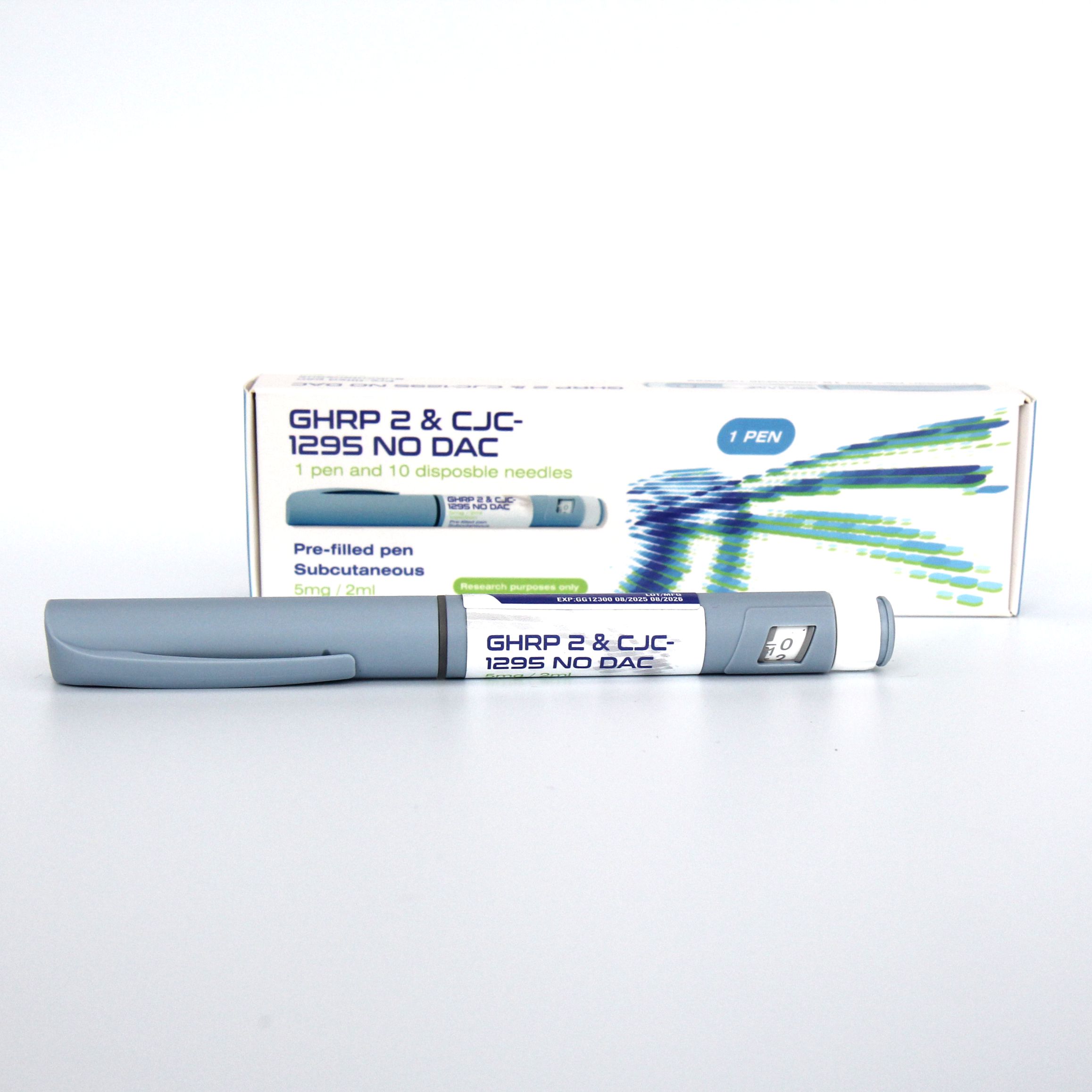
GHRP 2 & CJC-1295 NO DAC: Key Research Facts
GHRP 2 CJC-1295: What Researchers Should Know Before Use
When your research depends on consistent, reproducible results, the quality of your peptide materials isn’t a minor detail — it’s the foundation of every experiment. The GHRP 2 CJC-1295 blend has become a focal point for laboratory scientists studying cellular signaling pathways, peptide-receptor interactions, and growth hormone secretagogue mechanisms. Whether you’re designing in vitro assays or advancing molecular-level studies, understanding exactly what this compound is, how it’s formulated, and what to expect from a laboratory-grade source will save you time, resources, and frustration. This guide covers everything you need to know before ordering.
What Is the GHRP 2 CJC-1295 Blend?
The GHRP 2 CJC-1295 blend combines two well-characterized peptides into a single laboratory-grade formulation designed for controlled scientific research. GHRP-2, or Growth Hormone Releasing Peptide-2, is a synthetic hexapeptide that acts as a ghrelin mimetic, binding to the GHS-R1a receptor and stimulating downstream signaling cascades relevant to growth hormone secretagogue research. CJC-1295 No DAC is a modified form of Growth Hormone Releasing Hormone (GHRH), engineered without the Drug Affinity Complex to produce a shorter, more defined activity window — making it particularly useful for time-sensitive experimental protocols.
Together, these two peptides engage complementary receptor pathways. Researchers studying cellular signaling peptides often use this combination because the synergistic receptor engagement creates a more pronounced and measurable downstream response compared to either peptide used in isolation. This makes the blend especially valuable for labs working on receptor binding studies, peptide pathway research, or comparative efficacy models.
This formulation is presented as a high-purity, laboratory-grade product intended strictly for in vitro, cellular, and molecular research contexts. It is not formulated for human consumption. Every vial is produced under rigorous quality control standards to ensure batch-to-batch consistency — a non-negotiable requirement when your data needs to hold up to peer review or regulatory scrutiny.
Key Benefits and Features
High-Purity Blend for Scientific Research Use
Purity is the single most important variable when sourcing research peptides for labs. Impurities don’t just affect your results — they can invalidate entire experimental runs. This GHRP 2 CJC-1295 formulation is produced to high-purity standards, meaning you’re working with a compound that behaves predictably and consistently across assay conditions. For researchers who need to isolate peptide-specific effects, this level of purity is essential.
Laboratory-Grade Formulation for Controlled Studies
Not all peptide products are created equal. A laboratory-grade formulation goes through manufacturing and handling processes specifically designed for scientific use — not commercial supplement production. This distinction matters when you’re running in vitro peptide studies that require defined compound characteristics. The formulation is packaged to maintain stability and integrity from the point of production through to your bench.
Batch Quality Control for Consistency and Reproducibility
Reproducibility is the backbone of credible research. Batch-level quality control means that every lot of this peptide blend is tested and verified against defined specifications before it reaches your lab. When you replicate an experiment three months later using a new vial, you can trust that the compound characteristics remain comparable. This level of batch quality control is what separates a serious peptide supplier from a commodity vendor.
Packaged for Professional Laboratory Handling
Peptides are sensitive molecules. Improper packaging can degrade a compound before it ever reaches your pipette. This product is packaged with professional laboratory handling in mind — appropriate container materials, protective sealing, and shipping conditions that preserve compound integrity. Researchers working in regulated or semi-regulated environments will appreciate that the packaging meets the expectations of a professional scientific supply chain.
Suitable for In Vitro, Cellular, and Molecular Research
The versatility of the GHRP 2 CJC-1295 blend makes it applicable across a wide range of experimental contexts. From receptor binding assays and cell-based signaling studies to molecular pathway investigations, this compound fits neatly into diverse research designs. Labs that run multiple study types don’t need to source different peptide products for different protocols — this blend is formulated to perform across these varied applications.
Who Is This For? Addressing Your Pain Points
If you work in academic research, an industrial laboratory, or a specialized peptide research facility, you already know the frustration of sourcing compounds that don’t meet your standards. You’ve received vials with no certificate of analysis. You’ve dealt with suppliers who can’t answer basic questions about their manufacturing process. You’ve run experiments only to discover mid-study that batch inconsistency was skewing your data.
This product is built for laboratory personnel and academic researchers who refuse to compromise on material quality. If your work involves peptide pathway research — studying how GHRH analogs or ghrelin mimetics interact with target receptors — you need a compound source that gives you confidence before you even open the vial. The GHRP 2 CJC-1295 No DAC blend is designed exactly for that environment.
Industrial scientists running large-scale peptide-based biochemical studies face a different but equally pressing challenge: scalability and consistency. When your study requires multiple batches over months of research, every batch must perform the same way. Batch quality control isn’t a marketing phrase here — it’s a practical solution to one of the most common sources of experimental error in peptide research.
Pro tip: If you’re evaluating a new peptide supplier, always ask for the certificate of analysis before committing to a bulk order. A supplier confident in their product will provide it without hesitation.
How to Get Started with GHRP 2 CJC-1295 No DAC
- Review your experimental protocol. Before ordering, confirm that your study design is appropriate for a GHRP 2 and CJC-1295 No DAC combination. Define your endpoints, assay conditions, and required concentrations so you order the correct quantity from the start.
- Request documentation. Reach out to the supplier and confirm that a certificate of analysis is available for the specific batch you’ll receive. Verify purity specifications align with your research requirements before placing your order.
- Place your order through the product page. Visit the GHRP 2 CJC-1295 No DAC product page to review current stock, pricing, and available quantities. Select the amount appropriate for your study duration.
- Follow proper storage protocols upon receipt. Once your vial arrives, inspect the packaging for integrity. Store the peptide according to the recommended conditions — typically lyophilized peptides are stored at -20°C to maintain stability until reconstitution.
- Reconstitute under sterile conditions. Use bacteriostatic water or your preferred sterile diluent. Work in a laminar flow hood or equivalent sterile environment to avoid contamination that could compromise your results.
- Document and track your usage. Maintain a laboratory record of the batch number, reconstitution date, storage conditions, and volumes used. This documentation is critical for reproducibility and any future publication or regulatory review.
Frequently Asked Questions
What is the difference between CJC-1295 with DAC and CJC-1295 No DAC for research purposes?
CJC-1295 with DAC (Drug Affinity Complex) is engineered to bind to albumin in the bloodstream, significantly extending its half-life. CJC-1295 No DAC, by contrast, does not carry this modification, resulting in a shorter, more defined activity window. For laboratory research, the No DAC version is often preferred when researchers need to study time-specific signaling responses or design protocols with precise dosing intervals. The No DAC form allows for tighter experimental control, which is why it’s the standard choice for many in vitro peptide studies.
Is the GHRP 2 CJC-1295 blend suitable for cell culture experiments?
Yes. This laboratory-grade peptide blend is formulated with cellular and molecular research applications in mind. Researchers using cell-based assay systems can apply this compound to study receptor activation, downstream signaling cascades, and peptide-receptor interaction dynamics. Always ensure the compound is reconstituted in a sterile, cell-compatible diluent and that your working concentrations are validated against your specific cell line and assay format before running full experiments.
How should I store the GHRP 2 CJC-1295 No DAC vial to maintain peptide integrity?
Lyophilized peptide blends like this one should be stored at -20°C in a dry environment, away from light and repeated freeze-thaw cycles. Once reconstituted, the peptide solution should be aliquoted into single-use volumes and stored at 4°C for short-term use, or returned to -20°C for longer storage. Repeated freeze-thaw cycles degrade peptide integrity and can introduce variability into your experimental results — always prepare only what you need for immediate use.
What documentation should I expect when purchasing research peptides for labs?
A reputable supplier of research peptides for labs should provide a certificate of analysis (CoA) for every batch, detailing purity percentage, molecular weight confirmation, and the analytical method used (typically HPLC and mass spectrometry). Some suppliers also provide additional documentation such as amino acid sequencing data or sterility testing results. Always request the CoA specific to your batch number — not a generic document — to ensure the data reflects the exact material you receive.
Can the GHRP 2 CJC-1295 blend be used in molecular pathway research?
Absolutely. The combination of GHRP-2 and CJC-1295 No DAC engages both the GHS-R1a receptor and GHRH receptor pathways, making this blend highly relevant for molecular pathway research focused on growth hormone secretagogue mechanisms. Researchers studying downstream signaling molecules, gene expression changes, or receptor crosstalk will find this dual-peptide system a useful experimental tool. Ensure your molecular assay is validated for the specific pathway endpoints you’re measuring before initiating full-scale studies.
Ready to Advance Your Peptide Research?
The GHRP 2 CJC-1295 blend represents a serious tool for serious researchers. With high-purity formulation, rigorous batch quality control, and packaging designed for professional laboratory handling, this compound gives your research the reliable foundation it needs to generate meaningful, reproducible data. Don’t let substandard materials be the variable that undermines your next study.
Secure your supply and stay ahead of the latest offers by joining us on Telegram — where our research community gets first access to stock updates, exclusive pricing, and direct support from our team. Exclusive Deals on Telegram — connect now and make sure your lab never runs short on the compounds that matter most.
Reviews
There are no reviews yet.