No products in the cart.

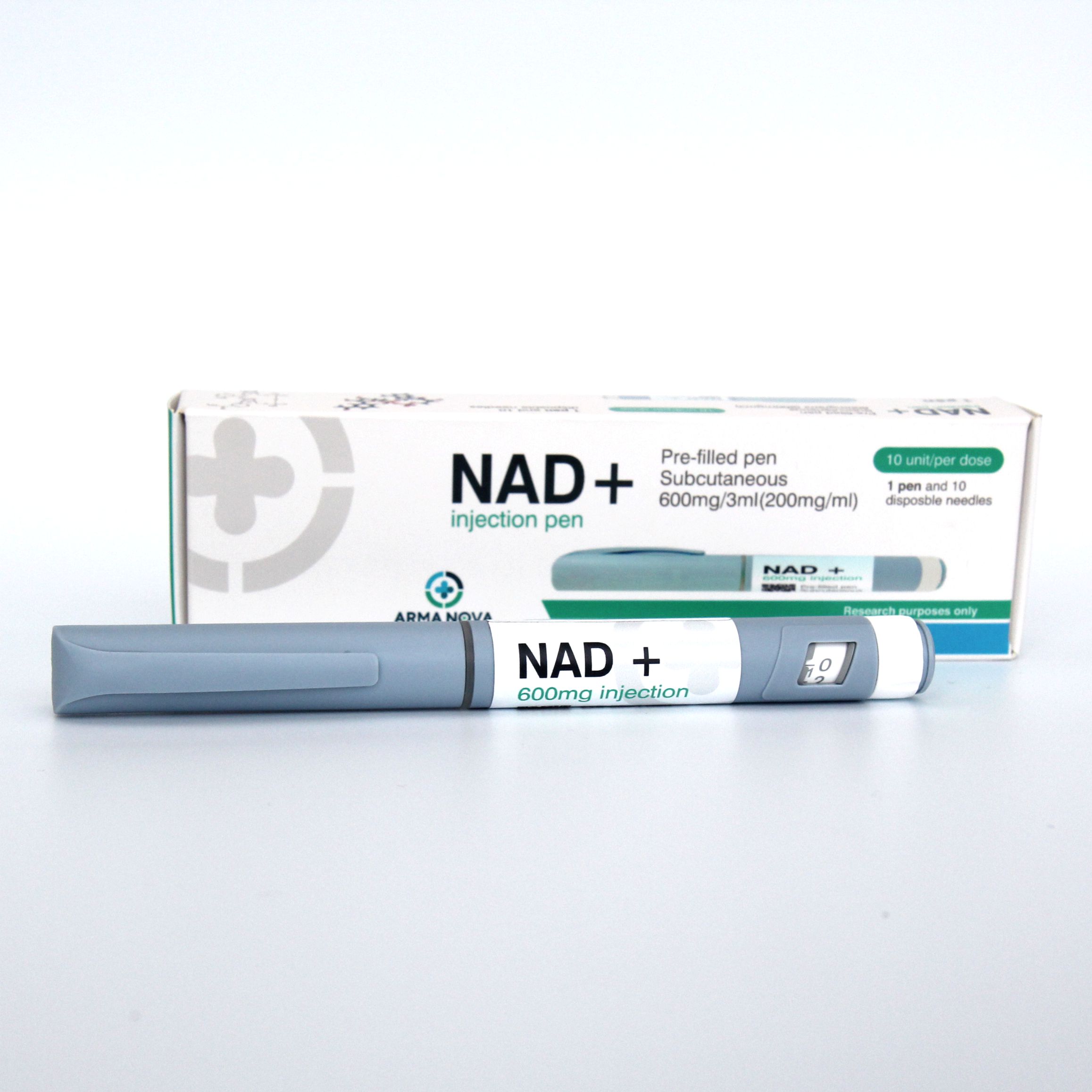
NAD Injection Review High Purity Research — Arma Peptides supplies NAD+ to UK researchers at ≥99% purity, verified by independent HPLC analysis. Every batch ships with a downloadable Certificate of Analysis (CoA), so you can confirm purity before use. Based in the UK, orders clear customs-free and typically arrive within 2–3 working days. NAD+ from Arma Peptides is intended strictly for laboratory and research purposes.
Download the Certificate of Analysis (CoA)

NAD+ Research Coenzyme: Uses, Benefits, and Lab Applications
Cellular energy metabolism research demands precision — and the coenzyme at the center of that work is NAD+ (nicotinamide adenine dinucleotide). Whether you’re investigating redox reactions, mapping enzyme pathways, or probing mitochondrial signaling, the quality of your NAD+ material directly shapes the reliability of your data. This guide covers everything you need to know about NAD+ 600mg research coenzyme: what it is, why it matters for controlled laboratory studies, who it’s designed for, and how to get started. By the end, you’ll have a clear picture of how this high-purity material fits into your research workflow.
What Is NAD+ Research Coenzyme?
NAD+ research coenzyme is a high-purity laboratory material formulated specifically for biochemical, cellular, and metabolic research applications. NAD+ — short for nicotinamide adenine dinucleotide — is a critical coenzyme found in all living cells, where it plays a central role in oxidation-reduction (redox) reactions that drive cellular energy production. In a research context, it serves as an essential reference compound for studying how cells generate and regulate energy at the molecular level.
The 600mg format offered here is a lyophilized powder, meaning it has been freeze-dried to preserve structural integrity and biochemical activity. This format is particularly valuable in laboratory settings because it extends shelf stability, reduces degradation risk during storage, and supports accurate reconstitution for dose-controlled experiments. Researchers working with cellular energy metabolism studies rely on this consistency to produce reproducible results across assay runs.
Beyond energy metabolism, NAD+ participates in enzyme interactions involving sirtuins, PARPs (poly ADP-ribose polymerases), and CD38 — making it a versatile compound for a wide range of mechanistic studies. It is explicitly positioned as a research-only material, clearly labeled for non-clinical, controlled laboratory use. This distinction is important for compliance-conscious research teams managing compound inventories under institutional guidelines.
Key Benefits and Features
High-Purity NAD+ Material for Controlled Laboratory Research
Purity is non-negotiable when you’re drawing conclusions from biochemical assays. This NAD+ material is manufactured to high-purity standards, meaning fewer contaminants that could interfere with enzyme kinetics or redox measurements. Consistent purity across batches lets you compare results between experiments without introducing variables tied to compound quality. For labs running longitudinal studies or multi-site trials, that batch-to-batch reliability is a significant operational advantage.
Lyophilized Format Supports Reproducible Lab Handling
The lyophilized NAD+ powder format is a deliberate design choice, not just a packaging convenience. Freeze-drying stabilizes the compound against moisture and temperature fluctuations that can degrade biological activity over time. When you reconstitute the powder in your chosen buffer, you get a consistent starting concentration — critical for metabolic assays where precise NAD+ levels determine the validity of your kinetic data. This format also makes aliquoting and long-term storage significantly more manageable in a busy lab environment.
Suitable for Redox, Metabolic, and Enzyme-Pathway Studies
NAD+ sits at the intersection of multiple research disciplines. In cellular energy metabolism research, it shuttles electrons in glycolysis and the citric acid cycle. In enzyme-pathway studies, it acts as a substrate or cofactor for dozens of dehydrogenases and regulatory proteins. Researchers studying mitochondrial function, oxidative stress, or metabolic disease models will find this compound directly applicable to their experimental designs. Its versatility makes it a foundational material rather than a niche reagent.
Clearly Labeled Research-Only Product for Non-Clinical Use
Regulatory clarity matters in compound procurement. This product is explicitly labeled for research use only, which simplifies documentation for institutional review boards and compound management systems. Labs operating under strict compliance frameworks — whether academic, biotech, or pharmaceutical — benefit from suppliers who make this distinction unambiguous. Clear labeling reduces administrative friction and keeps your compound inventory audit-ready.
Positioned for Comparative Compound and Peptide Research
One growing area of interest involves comparing NAD+ against other metabolic cofactors and compounds — including the frequently discussed NAD+ vs coenzyme Q10 comparison in mitochondrial research. Having a well-characterized, high-purity NAD+ material on hand allows researchers to design controlled comparative studies with confidence. Whether you’re benchmarking against CoQ10, NADH, or other redox-active compounds, starting with a reliable NAD+ reference material is essential for generating meaningful comparative data.
Who Is This For? Addressing Your Pain Points
If you’re a biochemist, cellular biologist, or life sciences researcher, you already know the frustration of sourcing compounds that don’t hold up under scrutiny. You order a reagent, run your assay, and then spend days troubleshooting whether your results reflect biology — or a contaminant in your compound. Inconsistent purity and poor documentation are among the most common pain points reported by lab teams sourcing NAD+ materials from unreliable suppliers.
This product is designed specifically for researchers who need a controlled-use NAD+ material they can trust. If your work involves enzyme interaction studies, mitochondrial signaling models, or metabolic pathway mapping, you need a compound that behaves predictably. The lyophilized format addresses the stability complaints that come with liquid NAD+ preparations, which can degrade quickly if not handled perfectly.
Compound buyers managing procurement for multi-investigator labs face a different challenge: they need materials that are consistently available, clearly documented, and easy to justify in purchasing records. This NAD+ research compound checks those boxes. It’s not a gray-area product — it’s a clearly labeled, research-grade material built for analytical use.
Whether you’re running a cellular energy metabolism research project or building a comparative compound library for a larger study, this material fits cleanly into a professional research workflow without the sourcing headaches that slow down experimental timelines.
How to Get Started with NAD+ 600mg Research Coenzyme
- Review your experimental requirements. Before ordering, confirm the NAD+ concentration range your assays require. The 600mg format provides sufficient material for multiple experimental runs, but knowing your target concentration helps you plan reconstitution volumes and storage aliquots in advance.
- Visit the product page. Head to the NAD+ 600mg Research Coenzyme product page to review specifications, purity documentation, and current availability. Verify that the listed specifications align with your protocol requirements before adding to cart.
- Place your order with documentation in mind. If your institution requires purchase justification or compound documentation, note the product’s research-only labeling — it simplifies that process. Keep your order confirmation for your compound inventory records.
- Reconstitute according to your protocol. Upon receipt, store the lyophilized powder under recommended conditions. When ready to use, reconstitute in your preferred buffer at the concentration your assay demands. The lyophilized format gives you flexibility here — reconstitute only what you need and store the remainder dry.
- Run your baseline assays first. Before integrating NAD+ into complex multi-variable experiments, run a baseline activity or concentration verification assay. This confirms your reconstituted material is performing as expected and gives you a reference point for interpreting downstream results.
Pro tip: Aliquot your reconstituted NAD+ into single-use volumes immediately after preparation. Repeated freeze-thaw cycles can compromise activity, so smaller aliquots protect the integrity of your remaining stock.
Frequently Asked Questions
What is NAD+ 600mg powder used for in laboratory research?
NAD+ 600mg powder is used as a reference coenzyme in biochemical and cellular research settings. Researchers apply it in studies of redox reactions, glycolysis, the citric acid cycle, and enzyme-pathway mapping involving dehydrogenases, sirtuins, and PARP proteins. It is also used in mitochondrial function studies and as a comparative compound in metabolic research. This product is intended strictly for controlled, non-clinical laboratory use.
How does lyophilized NAD+ powder differ from liquid NAD+ preparations?
Lyophilized NAD+ powder has been freeze-dried to remove moisture, which significantly extends its shelf life and protects biochemical activity during storage. Liquid NAD+ preparations are more susceptible to degradation from temperature fluctuations, oxidation, and microbial contamination. The powder format allows researchers to reconstitute precise concentrations on demand, making it more practical for labs that don’t use NAD+ continuously. Most research protocols that require consistent, reproducible NAD+ concentrations prefer the lyophilized format for this reason.
What is the difference between NAD+ and coenzyme Q10 in metabolic research?
NAD+ and coenzyme Q10 (CoQ10) are both involved in mitochondrial energy production, but they operate at different points in the electron transport chain and serve distinct biochemical roles. NAD+ primarily functions as an electron carrier in the early stages of cellular respiration, transferring electrons from metabolic substrates to Complex I of the mitochondrial respiratory chain. CoQ10 acts as a mobile electron carrier between protein complexes within the inner mitochondrial membrane. Researchers studying NAD+ vs coenzyme Q10 typically examine them in parallel to understand how disruptions in either pathway affect overall mitochondrial efficiency and cellular energy output.
Is this NAD+ research coenzyme suitable for enzyme interaction studies?
Yes — high-purity NAD+ material is well-suited for enzyme interaction studies because contaminants in lower-grade preparations can interfere with kinetic measurements and produce unreliable data. This product’s purity profile supports accurate Km and Vmax determinations in dehydrogenase assays and related enzyme studies. Researchers investigating sirtuin activity, PARP-mediated DNA repair, or NAD+-dependent metabolic enzymes will find this material appropriate for controlled mechanistic work. Always verify that your specific assay conditions are compatible with the reconstitution buffer you choose.
How should NAD+ research compound be stored after receipt?
In lyophilized form, NAD+ research compound should be stored in a cool, dry environment — typically at -20°C for long-term stability. Avoid exposure to moisture before reconstitution, as hydration can initiate degradation. Once reconstituted, aliquot into single-use volumes and store frozen to prevent activity loss from repeated freeze-thaw cycles. Always follow your institution’s compound storage guidelines and record receipt and storage conditions in your compound inventory log for compliance purposes.
Ready to Advance Your Metabolic Research?
NAD+ research coenzyme is one of the most versatile and foundational compounds in cellular and metabolic biology. Whether you’re mapping enzyme pathways, investigating mitochondrial signaling, or building a comparative compound library, starting with a high-purity, well-documented material makes every downstream result more defensible. This 600mg lyophilized format gives your lab the stability, precision, and regulatory clarity you need to move your research forward with confidence.
Don’t let sourcing uncertainty slow down your work. Exclusive Deals on Telegram — connect with the Arma Peptides team directly for availability updates, bulk pricing, and the latest research compound offerings. Your next study deserves a compound you can count on.
Reviews
There are no reviews yet.