GHK-Cu Peptide: What It Is and Why It Matters for Skin
Copper peptides have been studied for decades, but GHK-Cu consistently stands out as one of the most researched and compelling compounds in the peptide science space. Whether you’re a researcher investigating skin repair mechanisms, a formulation chemist building the next generation of topical compounds, or a buyer sourcing high-purity peptides for laboratory use, understanding what GHK-Cu does — and why the 100mg format matters — is essential. This guide breaks down the science, the practical applications, the target audience, and the key questions buyers ask before committing to a copper peptide for skin research.
What Is GHK-Cu Skin Glow 100mg?
GHK-Cu (Glycyl-L-Histidyl-L-Lysine copper complex) is a naturally occurring copper peptide first identified in human plasma. It consists of a tripeptide — glycine, histidine, and lysine — bound to a copper ion. This small but structurally significant molecule plays a documented role in wound healing signaling, collagen synthesis stimulation, and antioxidant activity at the cellular level.
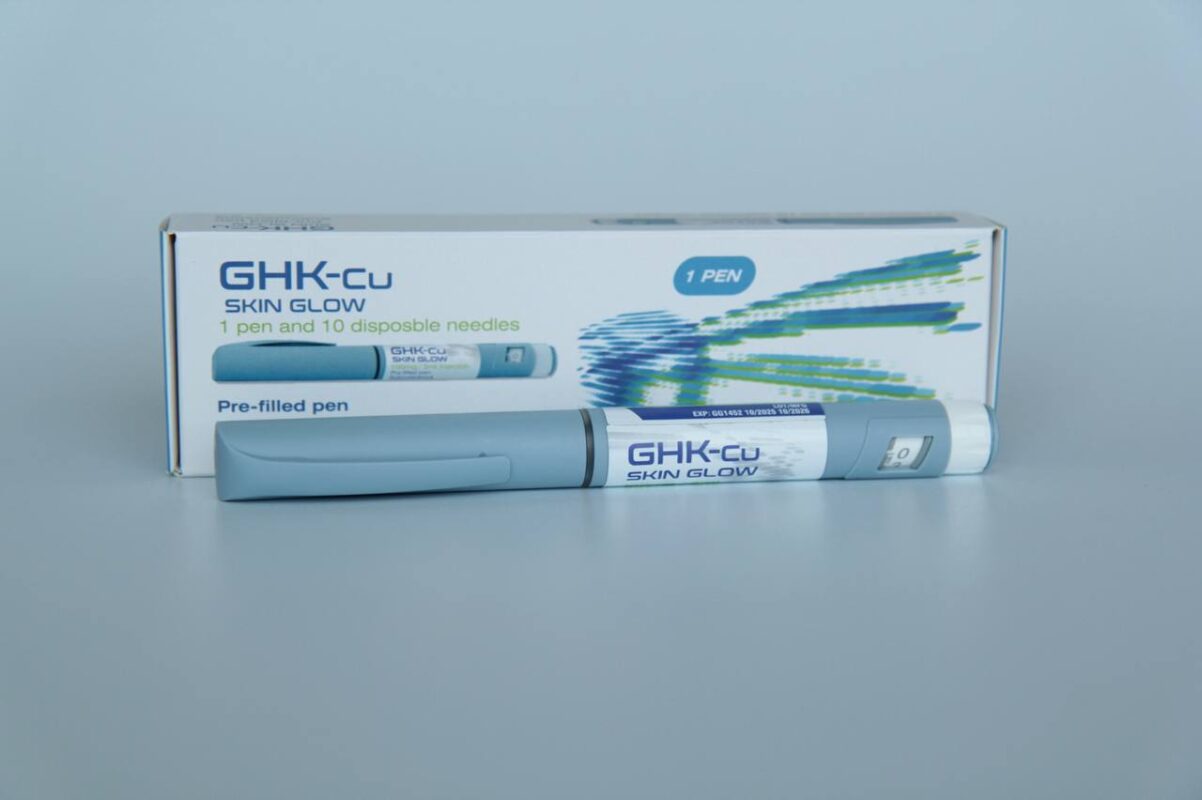
The GHK-Cu Skin Glow 100mg product is a research-grade formulation of this peptide, packaged at a quantity that supports both exploratory laboratory work and small-scale formulation testing. The 100mg size hits a practical sweet spot: large enough to run meaningful experiments or develop prototype topical compounds, but focused enough to minimize waste during early-stage research phases.
What separates GHK-Cu from generic copper supplements or lower-complexity peptides is its specificity. The copper ion is not simply present — it is chelated within the peptide structure in a way that allows for targeted biological signaling. Research published across dermatology and biochemistry literature has examined GHK-Cu’s influence on fibroblast activity, matrix metalloproteinase regulation, and gene expression patterns related to skin remodeling. This is not a surface-level cosmetic ingredient. It’s a compound with a documented molecular mechanism that researchers continue to explore.
As a copper peptide for skin research, GHK-Cu occupies a unique position. It bridges the gap between fundamental biochemistry and applied skincare science, making it relevant across academic labs, private research facilities, and skincare formulation teams simultaneously.
Key Benefits and Features of GHK-Cu 100mg
Skin-Focused Research Application for Targeted Study
The product name itself signals its primary research orientation: skin glow, skin repair, and skin rejuvenation peptide applications. GHK-Cu has been studied for its role in upregulating collagen and glycosaminoglycan synthesis — two structural components critical to skin elasticity and texture. For researchers designing experiments around dermal repair or photoaging, this compound provides a well-characterized starting point backed by an extensive body of existing literature.
100mg Format Supports Research and Formulation Testing
Quantity matters when you’re running controlled experiments. The 100mg size gives research teams enough material to conduct multiple trials, optimize concentration gradients, and test different delivery vehicles — all without immediately scaling to bulk quantities. Formulation chemists in particular benefit from this format because early-stage prototype development rarely requires large volumes, and having a precise, high-purity source reduces variables in the testing process.
High Purity Positioning for Reliable Data
When you’re studying a peptide for skin repair, the integrity of your results depends entirely on the purity of your compound. Research-grade GHK-Cu must meet rigorous standards to ensure that observed biological effects are attributable to the peptide itself — not contaminants or degradation byproducts. Sourcing from a supplier who prioritizes documented purity means your data stays defensible and your formulations stay consistent batch to batch.
Versatile Across Research Disciplines
GHK-Cu’s documented effects span multiple research categories: wound healing, anti-inflammatory signaling, antioxidant activity, and skin remodeling. This versatility makes the 100mg vial useful across a range of experimental designs without requiring researchers to stock multiple different compounds. Whether your lab focuses on dermatology, biochemistry, or cosmetic science, GHK-Cu research peptide applications can fit into your existing workflow.
Clearly Positioned for Skincare Science
Unlike general-purpose peptides that require significant contextual framing, GHK-Cu Skin Glow 100mg arrives with an immediately clear research context. This reduces onboarding time for new team members, simplifies procurement justification, and makes it easier to align the compound with grant applications or product development documentation that references copper peptide benefits in skin-related research.
Who Is This For? Addressing Your Pain Points
If you’ve spent time sourcing research peptides, you already know the frustration: inconsistent purity documentation, vague product descriptions, suppliers who can’t answer technical questions, and shipping practices that leave you wondering whether your compound survived transit. These are not minor inconveniences — they directly affect the quality of your research and the reliability of your results.
Research labs studying copper peptide applications need a supplier they can trust to deliver consistent, documented product. When you’re designing an experiment around GHK-Cu’s effect on fibroblast proliferation or collagen gene expression, a purity discrepancy between batches isn’t just annoying — it invalidates your data.
Skincare formulation teams face a different but equally real challenge. You’re working to develop topical compounds that incorporate skin rejuvenation peptides with measurable effects, and you need a source that provides the peptide at research-appropriate purity so your prototype formulations reflect what a final product could actually deliver. Vague sourcing undercuts your entire development process.
Ecommerce buyers and content creators researching peptide-based skin support products need clarity. You need to understand what you’re purchasing, why it matters, and how it fits into the broader landscape of copper peptide for skin applications — without wading through technical jargon that obscures rather than informs.
GHK-Cu Skin Glow 100mg addresses all three of these audiences directly. The product’s clear skincare research positioning removes ambiguity. The 100mg format is practical without being excessive. And sourcing from a supplier who understands peptide research — not just peptide sales — means you get the documentation and reliability your work requires.
How to Get Started with GHK-Cu Skin Glow 100mg
- Define your research objective. Before ordering, clarify what you’re studying. Are you investigating GHK-Cu’s effect on collagen synthesis in vitro? Testing it as an active ingredient in a topical formulation prototype? Establishing baseline data for a comparative peptide study? Your objective shapes how you’ll use the 100mg quantity and what supporting materials you’ll need.
- Review the product specifications. Visit the GHK-Cu Skin Glow 100mg product page and examine the listed purity, storage requirements, and documentation available. Confirm the compound meets your lab’s sourcing standards before placing an order.
- Plan your storage and handling protocol. GHK-Cu peptides require proper storage to maintain integrity. Typically this means refrigeration or freezing depending on your timeline, protection from light, and reconstitution with appropriate solvents when needed. Establish your handling protocol before the shipment arrives so you’re ready to process the compound correctly from day one.
- Place your order and track shipping. Reliable suppliers provide tracking and ship with discretion and appropriate cold-chain packaging where required. Confirm shipping details at checkout so your compound arrives in optimal condition.
- Document your baseline and begin experimentation. Once received and properly stored, begin your experimental protocol with documented baseline conditions. Record batch information, purity data, and reconstitution details so your results are fully reproducible and traceable to the specific compound lot.
Pro tip: If you’re new to working with copper peptides, start with a literature review of GHK-Cu’s established mechanisms before designing your experimental protocol. The existing research base is substantial and will help you design more targeted, meaningful experiments from the outset.
Frequently Asked Questions
What is GHK-Cu used for in skin research?
GHK-Cu is used in skin research to study its effects on collagen synthesis, wound healing, fibroblast activity, and antioxidant signaling. Researchers investigate how this copper peptide interacts with dermal cells and gene expression pathways related to skin remodeling and repair. It’s also studied as a potential active ingredient in topical formulations targeting skin texture, elasticity, and photoaging markers. The compound’s well-characterized molecular mechanism makes it a reliable research subject across multiple experimental designs.
How does GHK-Cu compare to other peptides for skin rejuvenation?
GHK-Cu is often compared to other bioactive peptides like Matrixyl (palmitoyl pentapeptide-4) or Argireline in the context of skin rejuvenation research. What distinguishes GHK-Cu is its copper-chelated structure, which enables specific biological signaling beyond simple receptor binding. While other peptides may target wrinkle-relaxing mechanisms or barrier support, GHK-Cu’s research profile spans collagen upregulation, anti-inflammatory activity, and tissue remodeling — giving it a broader documented scope of action in skin biology research.
Is GHK-Cu 100mg suitable for laboratory formulation testing?
Yes, the 100mg quantity is well-suited for laboratory formulation testing, particularly in early-stage prototype development. It provides enough material to test multiple concentration levels, assess stability across different carrier systems, and compare formulation variables without committing to bulk quantities. Research-grade purity is essential at this stage to ensure that any observed effects in your formulation are attributable to the GHK-Cu itself rather than impurities.
What purity level should I look for when buying a copper peptide for skin research?
For research applications, you should look for GHK-Cu with a purity level of 98% or higher, verified by third-party analytical testing such as HPLC (High-Performance Liquid Chromatography). Documentation should accompany the product, including a Certificate of Analysis (CoA) that confirms both identity and purity. Suppliers who cannot provide this documentation should be avoided, as unverified purity introduces uncontrolled variables that compromise experimental validity.
How should GHK-Cu peptide be stored to maintain stability?
GHK-Cu peptide should be stored in a cool, dry environment — typically at -20°C for long-term storage or 2–8°C for short-term use. Protect the compound from light and moisture, as both can accelerate degradation. Once reconstituted, use the solution promptly or store according to the supplier’s guidance. Always keep the vial sealed until use and avoid repeated freeze-thaw cycles, which can reduce peptide integrity over time.
Ready to Add GHK-Cu to Your Research Stack?
GHK-Cu Skin Glow 100mg delivers a well-characterized, research-grade copper peptide in a practical quantity designed for serious laboratory and formulation work. Its documented role in skin biology makes it one of the most relevant compounds available for researchers studying dermal repair, collagen synthesis, and skin rejuvenation mechanisms. When you source it right — with verified purity and proper documentation — it becomes a reliable foundation for meaningful, reproducible research.
Don’t leave your peptide sourcing to chance. Get access to exclusive deals and stay ahead of new product drops by joining the community: Exclusive Deals on Telegram. Take the next step in your research today and ensure you’re working with compounds that meet the standards your work demands.