No products in the cart.

GHK-Cu Peptide Guide: Uses, Research Value, and Quality
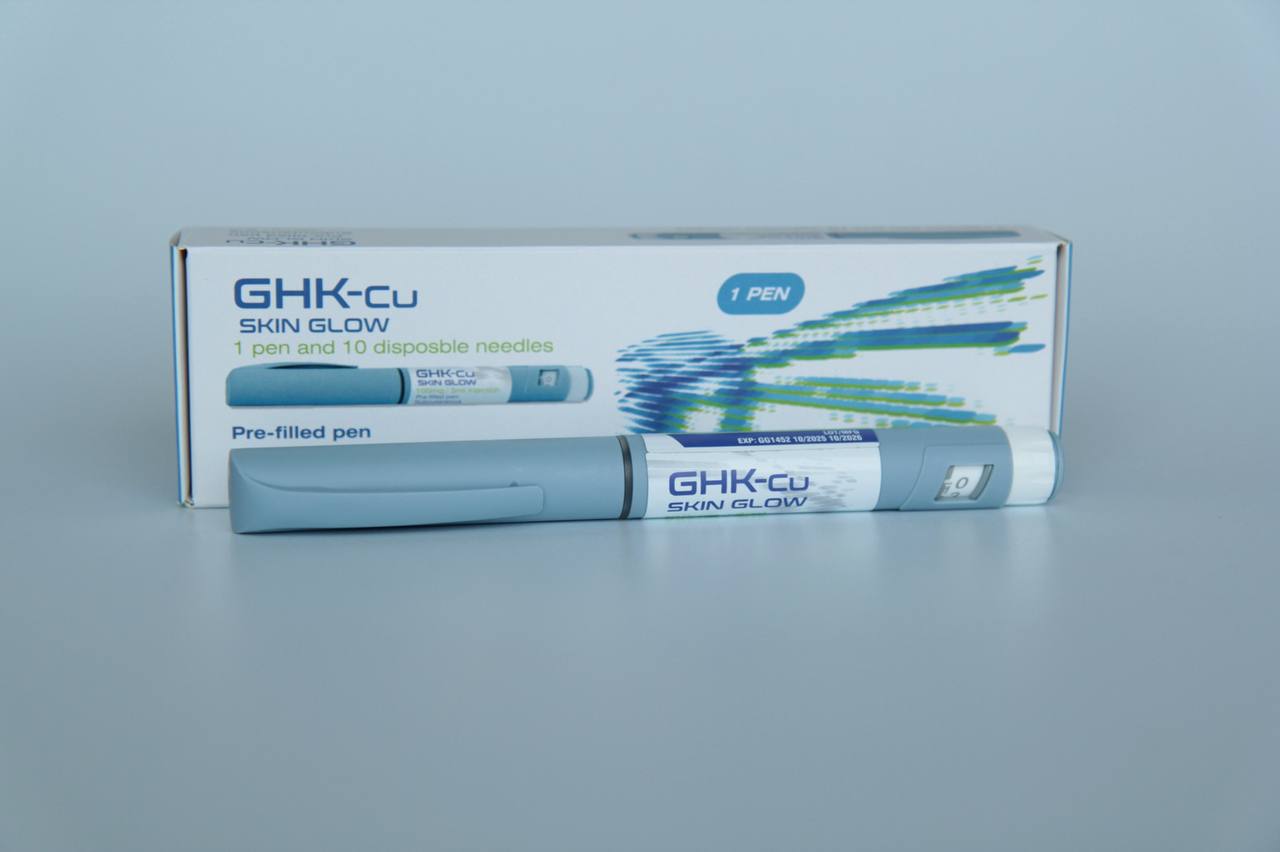
The GHK-Cu peptide has become one of the most actively studied copper-binding tripeptides in modern biochemical research — and for good reason. Its documented interactions at the cellular level have made it a focal point for labs investigating tissue remodeling, antioxidant activity, and gene expression regulation. Whether you are sourcing research-grade compounds for the first time or evaluating suppliers for a long-term project, this guide breaks down what GHK-Cu is, why its purity profile matters, who needs it, and how to procure it with confidence. You will leave with a clear picture of what separates laboratory-grade GHK-Cu from lower-quality alternatives.
What Is GHK-Cu?
GHK-Cu is a naturally occurring copper peptide complex composed of the tripeptide glycyl-L-histidyl-L-lysine (GHK) chelated to a copper(II) ion. First isolated from human plasma in the early 1970s, it has since attracted sustained scientific attention for its role in a broad spectrum of biological processes. The compound appears at measurable concentrations in human plasma, saliva, and urine, and its levels are known to decline with age — a pattern that has driven considerable interest in its study as a research tool.
In controlled laboratory settings, the GHK-Cu peptide is used to investigate mechanisms involving collagen synthesis, matrix metalloproteinase modulation, nerve tissue repair signaling, and antioxidant gene upregulation. Researchers working in molecular and cellular biology value it for its relatively well-characterized binding behavior and its reproducible activity profile when sourced at verified purity levels.
The compound is also frequently referenced in the context of skin biology research. Studies have examined how GHK-Cu interacts with fibroblasts and keratinocytes — the cells most directly involved in skin structure and repair. This has made it a high-priority research material for labs conducting biochemical investigations into dermal cell behavior, wound healing models, and aging-related cellular changes.
As a high purity copper peptide, GHK-Cu is distinct from general copper salt solutions or crude peptide preparations. Its efficacy as a research material depends heavily on the integrity of the copper chelation and the absence of degradation products. This is why sourcing from a supplier that provides batch-level documentation is non-negotiable for reproducible results.
Key Benefits and Features
High-Purity Research Material for Controlled Laboratory Use
When you are designing a controlled experiment, compound purity is not a preference — it is a variable that can invalidate your entire dataset if unaddressed. Laboratory grade peptide formulations of GHK-Cu, produced under strict manufacturing conditions, deliver the consistency that rigorous protocols demand. A high-purity preparation minimizes the risk of confounding signals from contaminants or degradation byproducts, giving your results a defensible baseline.
Produced Under Strict Quality Standards for Consistency
Reproducibility is the backbone of credible research. GHK-Cu produced under validated quality frameworks — including controlled synthesis environments and standardized lyophilization processes — ensures that each vial behaves predictably across experimental runs. For labs conducting multi-batch studies, this consistency is what allows data comparison across time points without introducing supplier-side variance as a confounding factor.
Packaged Securely to Support Compound Stability
Peptides are sensitive to moisture, heat, and light. Secure, research-appropriate packaging is not just a shipping consideration — it directly affects the compound’s integrity from the moment it leaves the production facility to the moment it enters your protocol. GHK-Cu for research applications should arrive in packaging that protects against oxidative degradation and premature breakdown of the copper chelate bond.
Batch Tested for Purity, Identity, and Stability
Batch-level testing using techniques such as HPLC and mass spectrometry provides verifiable confirmation that what is labeled on the vial matches what is inside it. This level of documentation supports compliance with institutional procurement standards and gives principal investigators the evidence trail needed for publication-grade sourcing disclosure. Always request a Certificate of Analysis (CoA) before committing to a supplier.
Suitable for Molecular and Biochemical Research
GHK-Cu’s utility spans multiple research disciplines. Labs focused on peptide for cellular studies use it to model signaling cascades, while biochemists leverage it to probe copper-dependent enzymatic pathways. Its documented interaction with over 4,000 human genes — as suggested by some genomic profiling research — makes it a versatile tool for exploratory and hypothesis-driven studies alike.
Who Is This For? Addressing Your Pain Points
If you are a laboratory researcher, procurement officer, or academic scientist, you already know the frustration of sourcing peptides from suppliers who cannot provide adequate documentation. You receive a vial with a label, a basic spec sheet, and little else. When your results come back inconsistent, you have no way to determine whether the compound itself was the problem — or your protocol.
This is the core challenge that serious researchers face when sourcing GHK-Cu research material: the market is flooded with cosmetic-grade and ambiguously labeled copper peptide products that were never intended for controlled scientific investigation. These products may carry the same name but lack the purity verification, stability data, and identity confirmation that research-grade compounds require.
Academic institutions and contract research organizations face an additional layer of complexity — procurement policies that require documented sourcing, CoA availability, and supplier traceability. Working with a supplier who understands these requirements and provides the necessary paperwork removes a significant administrative burden from your workflow.
If your team is conducting GHK-Cu vs copper peptide comparative studies, the need for a well-characterized reference compound becomes even more critical. Without a verified GHK-Cu preparation as your baseline, comparative data loses its interpretive foundation. The right research-grade supplier does not just sell you a compound — they give you the documentation infrastructure your study depends on.
Pro tip: Before ordering, confirm that the supplier offers batch-specific CoA documents that include HPLC purity percentage, molecular weight confirmation, and storage stability data. If they cannot provide all three, look elsewhere.
How to Get Started
- Define your research application. Before sourcing, clarify whether you need GHK-Cu for cell culture work, in vitro assays, or biochemical profiling. This will determine the quantity, concentration format, and storage requirements most appropriate for your protocol.
- Request documentation upfront. Contact the supplier before placing an order and ask for a sample Certificate of Analysis from a recent batch. Verify that it includes HPLC purity data, mass spectrometry identity confirmation, and a lot number you can reference.
- Review packaging and shipping specifications. Ensure the compound will be shipped under conditions appropriate for peptide stability — typically with desiccant, in sealed vials, and with cold-chain options available if your shipping window is extended.
- Place your order and log the batch details. Upon receipt, record the lot number, receipt date, and initial storage conditions in your lab notebook or LIMS system. This documentation supports traceability if questions arise during data review.
- Reconstitute according to validated protocols. Use sterile, appropriate solvents (commonly sterile water or dilute acetic acid depending on your assay requirements) and store reconstituted aliquots according to the supplier’s stability guidance. Avoid repeated freeze-thaw cycles to preserve compound integrity.
Frequently Asked Questions
What is GHK-Cu peptide used for in research?
The GHK-Cu peptide is used in laboratory research to study a wide range of biological mechanisms, including collagen and glycosaminoglycan synthesis, wound healing signaling, antioxidant gene activation, and copper-dependent cellular processes. It is a popular tool in molecular biology, dermal cell research, and biochemical assay development. Researchers also use it in comparative studies examining how copper-binding peptides modulate gene expression profiles. Its well-documented interaction with multiple cellular pathways makes it one of the more versatile peptides available for investigative use.
How do I verify the purity of a laboratory grade GHK-Cu peptide?
Purity verification for a laboratory grade peptide like GHK-Cu should rely on supplier-provided Certificates of Analysis that include HPLC chromatograms, purity percentage (typically expressed as ≥98% for research-grade material), and mass spectrometry data confirming molecular identity. You can cross-reference the reported molecular weight against the known value for GHK-Cu (approximately 340.4 g/mol for the free peptide). If a supplier cannot provide batch-specific documentation on request, treat that as a disqualifying factor for research procurement.
What is the difference between GHK-Cu and a standard copper peptide?
The term “copper peptide” is often used loosely in the cosmetic and supplement industries to describe any peptide that binds copper ions. GHK-Cu vs copper peptide comparisons matter in research because GHK-Cu refers specifically to the glycyl-L-histidyl-L-lysine-copper(II) complex — a defined molecular structure with a characterized binding constant and documented biological activity profile. Generic copper peptide preparations may vary in sequence, copper coordination chemistry, and purity, making them unsuitable as reference compounds in controlled studies. When precision matters, only a verified GHK-Cu preparation will do.
How should GHK-Cu research material be stored to maintain stability?
Lyophilized GHK-Cu research material should be stored at -20°C in a sealed, desiccated environment away from light and moisture. Once reconstituted, working solutions should be aliquoted to avoid repeated freeze-thaw cycles, which can degrade the copper chelate and reduce experimental reproducibility. Most suppliers recommend using reconstituted material within 30 days when stored at -80°C, though you should always defer to the stability data provided in your batch-specific CoA. Proper storage discipline is one of the most overlooked variables in peptide research — it directly impacts data quality.
Is GHK-Cu suitable for use in cellular studies and biochemical assays?
Yes — GHK-Cu is well-suited for use in a range of peptide for cellular studies and biochemical assay formats, including cell viability assays, gene expression profiling, protein synthesis quantification, and enzyme activity studies. Its water solubility and relatively stable chelate structure make it compatible with standard cell culture media at physiologically relevant concentrations. Researchers should verify endotoxin levels in their specific batch if working with primary cell cultures or sensitive cell lines, as endotoxin contamination can confound inflammatory signaling readouts. A reputable supplier will include endotoxin testing data in their documentation package.
Ready to Source Research-Grade GHK-Cu?
GHK-Cu is one of the most scientifically substantiated copper peptides available for laboratory investigation — but its value to your research is only as strong as the quality of the material you source. Batch-tested purity, verified identity, and stable packaging are not optional extras; they are the foundation of reproducible, publication-ready data.
Don’t compromise your research with underdocumented compounds. Explore the full product details and documentation at Exclusive Deals on Telegram and connect with the Arma Peptides team to confirm availability, request your batch CoA, and get your order moving. Your next experiment deserves a compound you can actually trust.
Research context: see published GHK-Cu research (PMID: 29986520) for further reading.