
No products in the cart.
Retatrutide UK: Complete Guide to Triple-Agonist Peptide 2026
Retatrutide UK: The Complete Research Guide to LY3437943 Triple Agonist Therapy
In the Phase 2 clinical trial published in the New England Journal of Medicine, participants receiving the highest dose of retatrutide achieved a mean body weight reduction of 24.2% at 48 weeks—the largest effect size recorded for any pharmacological obesity intervention to date. Unlike dual-agonist peptides such as tirzepatide, retatrutide (LY3437943) activates three distinct receptor pathways: GLP-1, GIP, and glucagon. The glucagon receptor agonism distinguishes this compound mechanistically, driving hepatic fat oxidation and thermogenic energy expenditure through pathways that GLP-1 and GIP agonism alone cannot access. For researchers, clinicians, and biohackers in the UK evaluating retatrutide uk sourcing options, understanding the molecular basis of this triple-agonist mechanism—and the clinical data substantiating its use—is essential before procurement.
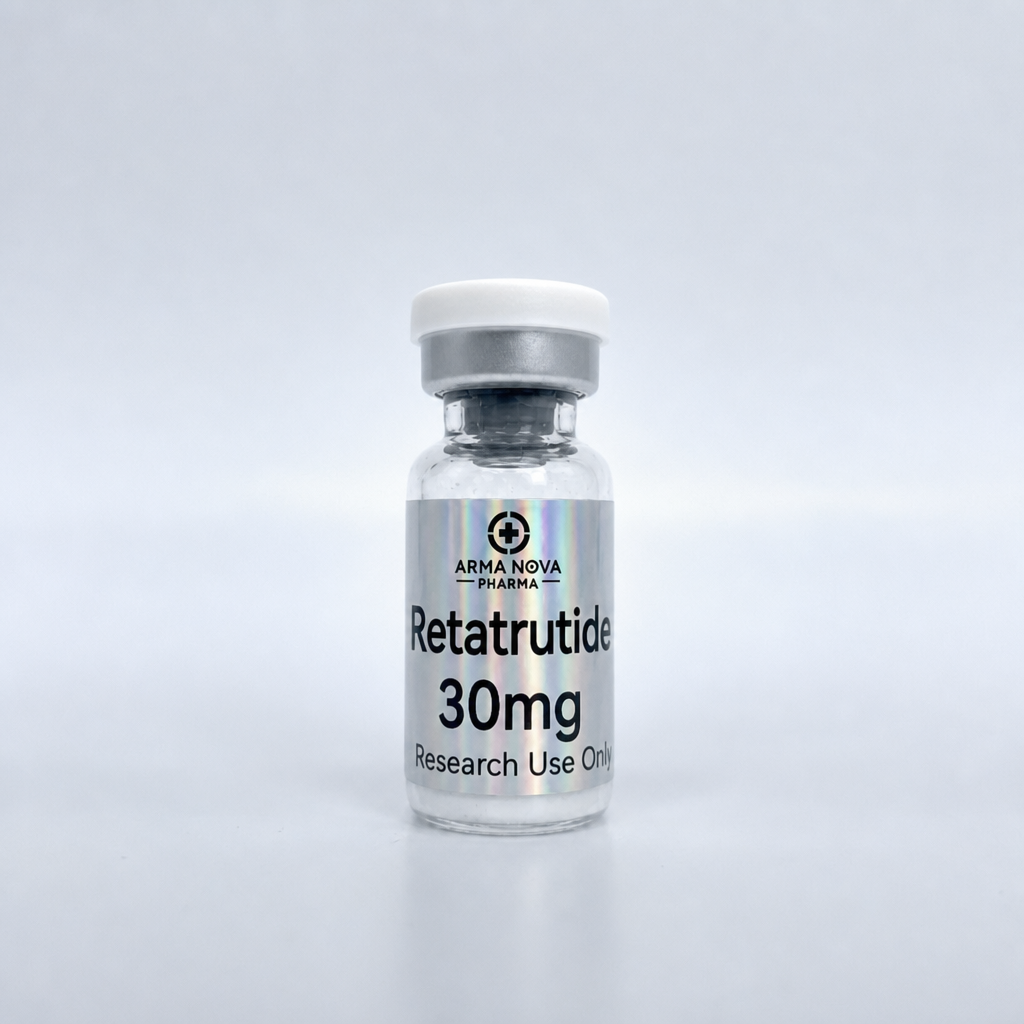
This guide consolidates published trial data, receptor pharmacology, UK-specific sourcing considerations, and research protocol frameworks drawn exclusively from peer-reviewed literature. All statements regarding efficacy are grounded in human trial evidence published in indexed journals, not marketing claims or anecdotal reports.
Molecular Mechanism: How Retatrutide Works at the Receptor Level
Retatrutide is a single peptide sequence engineered to engage three G-protein-coupled receptors: the glucagon-like peptide-1 receptor (GLP-1R), glucose-dependent insulinotropic polypeptide receptor (GIPR), and glucagon receptor (GCGR). The simultaneous agonism of these pathways produces overlapping and synergistic metabolic effects that cannot be replicated by selective or dual-agonist compounds.
GLP-1 Receptor Agonism
GLP-1R activation stimulates insulin secretion in a glucose-dependent manner, suppresses glucagon release postprandially, and delays gastric emptying. Centrally, GLP-1R engagement in hypothalamic nuclei reduces appetite and food-seeking behaviour through pro-opiomelanocortin (POMC) neuron activation. This pathway is shared with Semaglutide UK, the GLP-1-selective agonist approved for obesity management.
GIP Receptor Agonism
GIPR activation enhances insulin secretion and improves peripheral insulin sensitivity. Unlike GLP-1R agonism, GIPR engagement promotes lipid clearance from circulation and may enhance adipocyte differentiation toward a metabolically favourable phenotype. The dual GLP-1/GIP agonist Tirzepatide UK leverages this combination, producing greater weight loss than GLP-1 monotherapy in head-to-head trials.
Glucagon Receptor Agonism: The Distinguishing Feature
Glucagon receptor activation increases hepatic glucose output, but in the context of concurrent GLP-1R and GIPR agonism, this hyperglycaemic effect is offset. What remains is the glucagon-driven increase in energy expenditure: GCGR agonism elevates basal metabolic rate through thermogenesis, enhances hepatic fatty acid oxidation, and promotes intrahepatic triglyceride mobilisation. This third axis addresses hepatic steatosis more directly than dual-agonist approaches and may account for retatrutide’s superior effect size in clinical trials.
The molecular structure of retatrutide incorporates modifications to the native peptide backbone—including fatty acid acylation—that extend circulating half-life and permit once-weekly subcutaneous administration. These pharmacokinetic properties align with those of other long-acting peptide therapeutics, enabling sustained receptor occupancy without daily dosing.
What the Research Shows: Phase 2 Trial Data and Cardiovascular Context
The pivotal Phase 2 trial of retatrutide, conducted by Jastreboff AM et al. (2023) and published in the New England Journal of Medicine, enrolled 338 adults with obesity (BMI ≥30 kg/m²) or overweight with weight-related comorbidity (BMI ≥27 kg/m² plus at least one condition). Participants were randomised to receive placebo or retatrutide at doses of 1 mg, 4 mg, 8 mg, or 12 mg administered subcutaneously once weekly for 48 weeks, alongside lifestyle counselling.
Primary Efficacy Outcomes
At 48 weeks, the least-squares mean percentage change in body weight from baseline was:
- Placebo: −2.1%
- Retatrutide 1 mg: −8.7%
- Retatrutide 4 mg: −17.3%
- Retatrutide 8 mg: −22.8%
- Retatrutide 12 mg: −24.2%
All active doses demonstrated statistically significant superiority to placebo (P < 0.001). The 12 mg dose cohort also showed that 91% of participants achieved ≥5% weight loss, 75% achieved ≥15% weight loss, and 50% achieved ≥20% weight loss—thresholds associated with meaningful cardiometabolic risk reduction.
Secondary Metabolic Endpoints
Beyond weight, retatrutide produced dose-dependent improvements in glycaemic control, lipid profiles, and blood pressure. Mean reductions in HbA1c ranged from 0.4% to 0.6% across active doses, despite participants not having diabetes at baseline. Total cholesterol, LDL cholesterol, and triglycerides all declined significantly, while systolic blood pressure decreased by 5–10 mmHg in the highest dose groups.
Cardiovascular Outcomes Data in Context
While retatrutide-specific cardiovascular outcomes trials (CVOTs) are ongoing, the broader incretin-based therapeutic class has demonstrated cardiovascular benefit. Lincoff AM et al. (2023) published SELECT trial data in the New England Journal of Medicine, showing that semaglutide reduced major adverse cardiovascular events (MACE) by 20% in individuals with obesity and established cardiovascular disease but without diabetes. This establishes a precedent for the cardioprotective potential of incretin-based agents in non-diabetic populations—a context directly relevant to retatrutide’s anticipated use.
Phase 3 trials for retatrutide are underway, with projected completion in 2026. These studies will clarify long-term safety, durability of weight loss, and cardiovascular impact across diverse populations.
Sourcing Retatrutide UK: Purity, COAs, and Supplier Verification
For researchers procuring retatrutide uk for laboratory or self-directed research purposes, peptide purity and authenticity are non-negotiable. Retatrutide is not currently approved for human therapeutic use in the UK under MHRA regulation, and is supplied exclusively for research purposes under UK law. All use must comply with applicable legal and ethical frameworks governing research peptides.
Why Purity Matters
Synthetic peptides manufactured via solid-phase peptide synthesis (SPPS) may contain residual solvents, truncated sequences, diastereomers, or aggregated forms. These impurities can alter receptor binding affinity, pharmacokinetics, and immunogenicity. High-performance liquid chromatography (HPLC) is the standard analytical technique for quantifying peptide purity, and reputable suppliers provide HPLC chromatograms alongside each batch.
Arma Peptides supplies Retatrutide 30mg UK at ≥99% purity, verified by HPLC. Each batch is accompanied by a Certificate of Analysis (COA) detailing purity percentage, molecular weight confirmation via mass spectrometry, and sterility testing results. These COAs are published per batch and accessible to customers prior to purchase.
How to Read a Certificate of Analysis
A comprehensive COA for research peptides should include:
- HPLC Chromatogram: A graphical representation showing peptide peak purity. The area under the main peak should represent ≥99% of total integrated area. Additional peaks indicate impurities.
- Mass Spectrometry (MS) Data: Confirms molecular weight matches the theoretical mass of retatrutide. Discrepancies suggest sequence errors or incomplete synthesis.
- Peptide Content: Expressed as a percentage of total powder mass. Accounts for counterions, residual water, and acetate/TFA salts.
- Sterility Testing: Confirms absence of bacterial/fungal contamination if intended for in vivo use.
- Endotoxin Levels: Measured in endotoxin units (EU) per milligram. Low endotoxin levels (<1 EU/mg) are critical for avoiding inflammatory responses in animal models or human use.
UK Delivery and Pricing Context
Arma Peptides offers next-day delivery across the UK, with all orders dispatched from UK-based facilities. Pricing is transparent and listed in GBP, with no hidden import fees or customs delays associated with international suppliers. For researchers requiring consistent supply for longitudinal studies, batch-to-batch consistency is maintained through rigorous QC protocols and supplier audits.
Research Protocols: Doses and Administration from Published Literature
The following information is drawn exclusively from published clinical trial protocols and is presented for academic reference only. It does not constitute medical advice, prescribing guidance, or a recommendation for off-label use. All research involving human subjects must be conducted under appropriate ethical oversight and regulatory approval.
Dosing in the Phase 2 Trial
Participants in the Jastreboff et al. (2023) trial received subcutaneous injections of retatrutide once weekly. Dosing was escalated gradually to minimise gastrointestinal side effects:
- Weeks 1-4: 0.5 mg/week (for all active groups)
- Weeks 5-8: 1 mg/week (for 1 mg group), 2 mg/week (for 4/8/12 mg groups)
- Weeks 9-12: Target dose reached incrementally (4 mg, 8 mg, or 12 mg groups escalated in 2–4 mg increments every 4 weeks)
This titration schedule reduced the incidence of nausea and vomiting, the most commonly reported adverse events. Median time to target dose was 16–20 weeks for the highest dose cohorts.
Reconstitution and Storage
Lyophilised retatrutide powder is typically reconstituted with bacteriostatic water for injection. A common reconstitution protocol for a 30 mg vial involves adding 3 mL of bacteriostatic water, yielding a concentration of 10 mg/mL. Reconstituted peptide should be stored at 2–8°C and used within 28 days to maintain stability. Lyophilised powder remains stable for 24–36 months when stored at -20°C.
Route of Administration
Subcutaneous injection into abdominal tissue is standard. Injection sites should be rotated to prevent lipohypertrophy. Intramuscular or intravenous administration is not supported by published literature and may alter pharmacokinetics unpredictably.
Retatrutide UK: Comparison with Dual-Agonist and Mono-Agonist Peptides
Understanding retatrutide’s position within the incretin-based therapeutic landscape requires direct comparison with established agents. The table below summarises key mechanistic and clinical differences:
| Parameter | Semaglutide | Tirzepatide | Retatrutide |
|---|---|---|---|
| Receptor Targets | GLP-1 only | GLP-1 + GIP | GLP-1 + GIP + Glucagon |
| Mean Weight Loss (48 weeks) | ~15% (2.4 mg dose) | ~21% (15 mg dose) | ~24% (12 mg dose) |
| Hepatic Fat Metabolism | Indirect (via weight loss) | Moderate (via GIPR lipid clearance) | Direct (GCGR-driven hepatic oxidation) |
| Energy Expenditure | Minimal effect | Mild increase | Significant increase (thermogenesis) |
| Regulatory Status (UK) | Approved (Wegovy) | Approved (Mounjaro) | Research use only |
| Dosing Frequency | Once weekly | Once weekly | Once weekly |
The incremental benefit of retatrutide over tirzepatide (~3% additional weight loss) may appear modest, but at population scale, this difference translates to substantially greater reductions in obesity-related comorbidity prevalence. Moreover, the glucagon-mediated enhancement of hepatic fat oxidation positions retatrutide as a potential therapeutic for non-alcoholic fatty liver disease (NAFLD) and non-alcoholic steatohepatitis (NASH), conditions inadequately addressed by GLP-1 or dual-agonist monotherapy.
Frequently Asked Questions: Retatrutide UK
1. Is retatrutide legal to purchase in the UK for personal research use?
Retatrutide is not approved by the MHRA for therapeutic use and is therefore not available via prescription in the UK. It may be purchased for research purposes by individuals or institutions engaged in legitimate scientific inquiry. All use must comply with UK regulations governing research peptides, and buyers must not claim or imply therapeutic intent. Arma Peptides supplies retatrutide exclusively for research applications, accompanied by documentation stating “For research use only—not for human consumption.”
2. How does retatrutide compare to tirzepatide in terms of side effects?
Both compounds share a similar adverse event profile, dominated by gastrointestinal symptoms: nausea, vomiting, diarrhoea, and constipation. In the Phase 2 trial, these events were generally mild to moderate and diminished over time. The incidence of nausea in the retatrutide 12 mg group was approximately 60%, compared to 40–50% in tirzepatide trials. Dose titration reduces symptom severity. Serious adverse events (pancreatitis, gallbladder disease) occurred at low rates comparable to other incretin-based agents.
3. What is the expected timeline for UK regulatory approval of retatrutide?
Phase 3 trials are projected to complete in 2026, with regulatory submissions anticipated in 2027. If approved, UK market availability would likely follow 12–18 months post-submission, placing potential MHRA approval in 2028–2029. Until then, access remains limited to research contexts.
4. Can retatrutide be used in combination with other weight-loss peptides?
No published data support the safety or efficacy of combining retatrutide with other GLP-1 or GIP agonists. Mechanistically, the risk of additive gastrointestinal side effects and hypoglycaemia (in individuals with diabetes) would be elevated. Concurrent use of retatrutide with metformin, SGLT2 inhibitors, or other non-incretin metabolic agents has not been studied in controlled trials.
5. What purity level is acceptable for research-grade retatrutide?
For in vivo research, ≥98% purity (by HPLC) is the minimum acceptable standard. For human self-experimentation or clinical research contexts, ≥99% purity is strongly recommended to minimise immunogenic risk and ensure consistent pharmacokinetics. Arma Peptides’ Retatrutide 30mg UK meets and exceeds this threshold, with batch-verified purity ≥99%.
Final Considerations and Regulatory Disclaimer
Retatrutide represents the most potent pharmacological intervention for obesity documented in controlled human trials to date. Its triple-agonist mechanism—particularly the inclusion of glucagon receptor activation—addresses metabolic pathways left untouched by earlier incretin-based therapies. For UK-based researchers and informed self-experimenters seeking access to retatrutide uk, supplier credibility, peptide purity, and adherence to legal research frameworks are paramount.
Arma Peptides provides pharmaceutical-grade retatrutide with full analytical verification, transparent COAs, and UK-based logistics. All products are intended for research purposes only and are not sold for human therapeutic use. Individuals considering retatrutide for personal research should consult with qualified medical professionals and ensure compliance with all applicable UK regulations.
Disclaimer: Retatrutide is not approved for therapeutic use in the UK and is supplied exclusively for research purposes. This article is intended for educational and informational purposes only and does not constitute medical advice, diagnosis, or treatment recommendation. All clinical data cited are drawn from published peer-reviewed research and do not imply endorsement of off-label or unapproved use. Users assume full responsibility for compliance with UK law and for any risks associated with research peptide use. Always consult a qualified healthcare provider before initiating any experimental intervention.

Add comment