
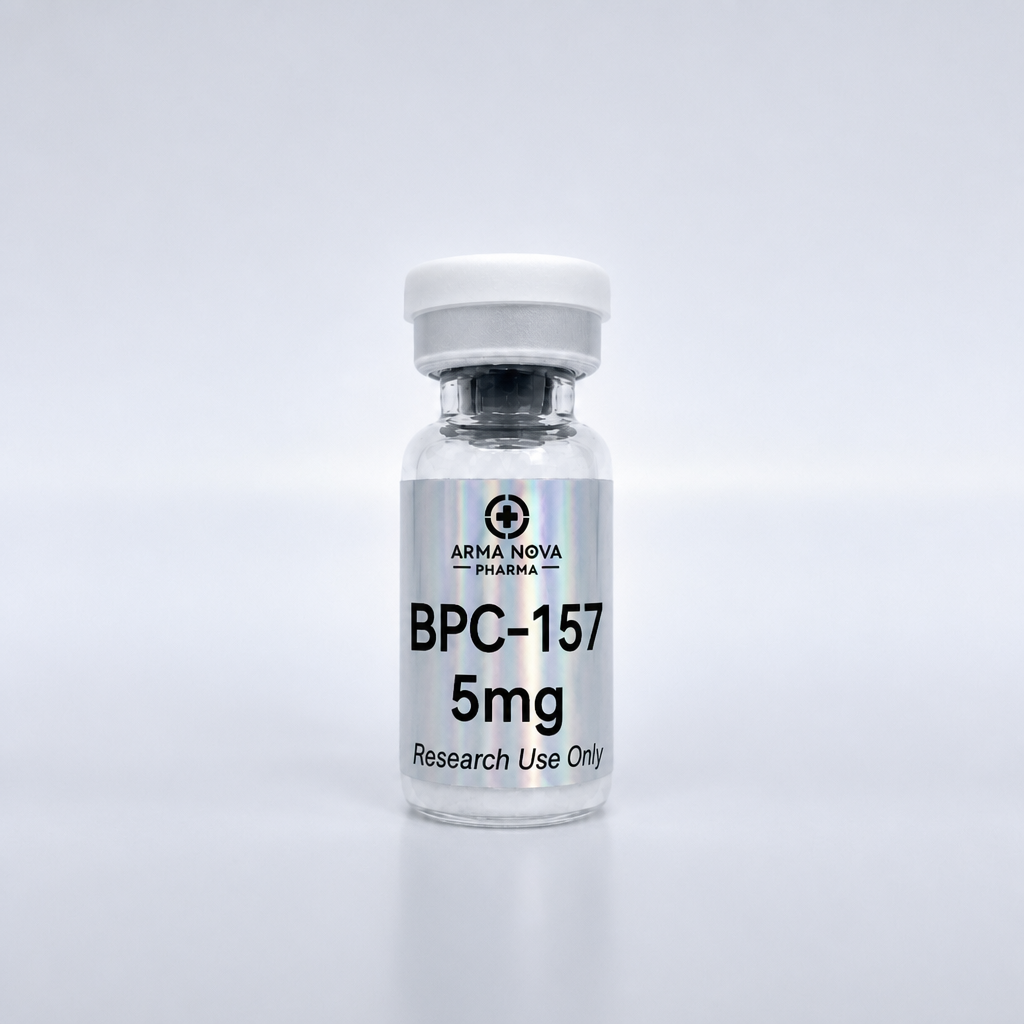
BPC 157 5MG
£16.00
BPC-157 5mg — research-grade pentadecapeptide (Body Protection Compound 157), a 15-amino acid sequence derived from human gastric juice protein. Manufactured to ≥99% purity, HPLC verified, supplied with Certificate of Analysis. Strictly for controlled laboratory research. Not for human or veterinary use.
16 people are viewing this product right now
🔥 6 items sold in last 3 hours
What Is BPC 157?
BPC 157 (Body Protection Compound 157) is a synthetic pentadecapeptide consisting of 15 amino acids, derived from a partial sequence of human gastric juice protein BPC. The compound has been extensively studied in preclinical research models for its cytoprotective, angiogenic, and tissue-modulating properties across a wide range of biological systems. Its amino acid sequence — Gly-Glu-Pro-Pro-Pro-Gly-Lys-Pro-Ala-Asp-Asp-Ala-Gly-Leu-Val — is stable in gastric conditions and has been shown in experimental models to exert activity at multiple receptor systems including nitric oxide, VEGFR2, and FAK signalling pathways.
Among the most widely referenced peptides in gastrointestinal, musculoskeletal, and wound-healing research literature, BPC 157 is supplied by Arma Peptides as a lyophilised powder manufactured to ≥99% purity, intended exclusively for in vitro and in vivo laboratory investigations. Researchers requiring a higher quantity may also consider BPC 157 10mg from Arma Peptides.
Mechanism of Action
BPC 157 exerts its experimentally observed effects through multiple receptor-mediated and intracellular signalling pathways. In laboratory models, the compound has been associated with upregulation of the nitric oxide (NO) system, modulation of vascular endothelial growth factor receptor 2 (VEGFR2), and activation of focal adhesion kinase (FAK) — pathways implicated in angiogenesis, cell migration, and tissue repair.
The peptide has also been investigated for interactions with dopaminergic and serotonergic systems in central nervous system models. In gut epithelial research, it has been shown to promote mucosal healing and barrier integrity via upregulation of cytoprotective mediators — a profile that has made BPC 157 a frequently cited reference compound across gastroenterology, orthopaedic biology, and neuroimmune research.
BPC 157 Research Overview
Few synthetic peptides have accumulated as substantial a preclinical research body as BPC 157, with studies spanning gastrointestinal integrity, tendon and ligament repair, muscle healing, bone regeneration, and CNS function. Research in rodent models has consistently demonstrated activity in gut protection paradigms, including NSAID-induced and ethanol-induced gastrointestinal lesion studies.
Beyond GI research, the compound has been examined in surgical and injury models covering Achilles tendon transection, bone fracture repair, and peripheral nerve damage. Structural and pharmacological data are indexed at PubChem (NIH), with bioactivity records in the ChEMBL database (EMBL-EBI), and peer-reviewed literature indexed at NCBI.
Research Applications
BPC 157 is referenced across a broad range of experimental models in published literature. Documented research applications include:
- Gastrointestinal mucosal protection and gut barrier integrity studies
- Tendon, ligament, and musculoskeletal tissue repair models
- Angiogenesis and VEGFR2-mediated vascular remodelling research
- Bone fracture healing and periosteal regeneration investigations
- Peripheral nerve injury and regeneration models
- CNS neuroprotection and dopaminergic/serotonergic signalling studies
- Nitric oxide system modulation and cytoprotective pathway characterisation
- Wound healing and skin repair in dermatological research models
Product Specifications
| Attribute | Detail |
|---|---|
| Peptide Name | BPC 157 (Body Protection Compound 157) |
| Quantity | 5mg |
| Form | Lyophilised powder |
| Purity | ≥99% (HPLC verified) |
| Molecular Weight | ~1,419.5 Da |
| Amino Acids | 15 (pentadecapeptide) |
| Sequence | Gly-Glu-Pro-Pro-Pro-Gly-Lys-Pro-Ala-Asp-Asp-Ala-Gly-Leu-Val |
| Origin | Supplied by Arma Peptides, UK/EU |
| CoA | View Laboratory Tests |
Storage & Handling
Store at –20°C in the original sealed vial, protected from light and moisture. Once reconstituted for experimental use, aliquots should be kept at 4°C and used promptly in accordance with standard peptide handling protocols. Reconstitution for laboratory purposes is typically performed using sterile or bacteriostatic water. All handling of BPC 157 must comply with applicable institutional biosafety guidelines and relevant regulatory requirements.
Related Research Peptides
Researchers working with this compound in tissue repair, GI, or neuroimmune models may also find the following Arma Peptides compounds relevant:
- BPC 157 10mg — higher-quantity format for extended or multi-arm research protocols
- BPC 157 & TB500 Blend 20mg — dual-peptide formulation combining the compound with thymosin beta-4 fragment
- TB500 5mg — thymosin beta-4 fragment studied in tissue remodelling and repair research
- GHK-Cu 50mg — copper peptide investigated in cellular repair and anti-inflammatory contexts
Research Disclaimer
BPC 157 5mg is supplied by Arma Peptides strictly for controlled scientific research. Not intended for human or veterinary use. All handling must comply with applicable institutional and regulatory guidelines.
1 review for BPC 157 5MG
Related products

Out of stock


Out of stock

Adam –
Ordered BPC-157 from Arma Peptides and had a smooth experience. Fast shipping and everything arrived as expected.